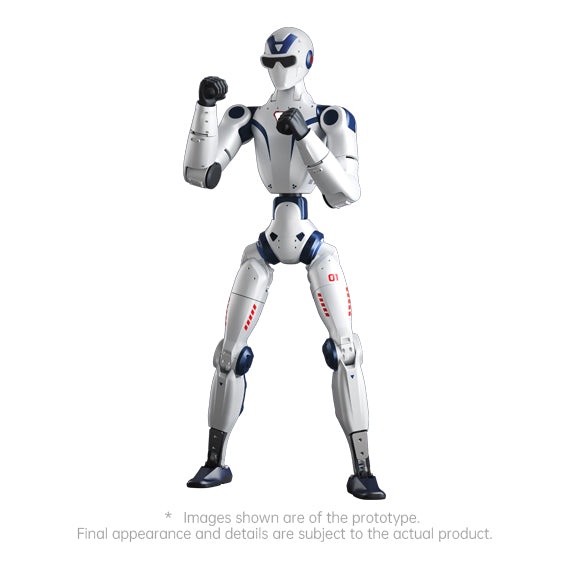
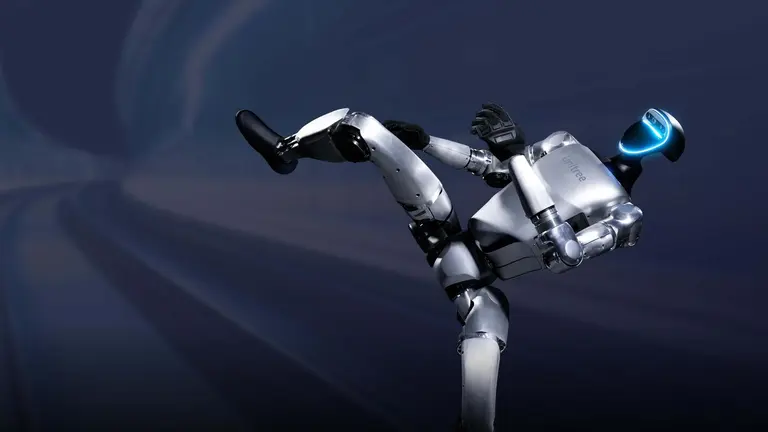
The Unitree G1 successfully walked 130,000+ steps at -47.4°C (-53°F) in China's Xinjiang Altay region—nearly 40°C below its rated operating minimum. This makes the $16,000 G1 the first humanoid robot to demonstrate autonomous operation in extreme sub-Arctic conditions, shattering previous records and proving the viability of bipedal robotics for Arctic industrial operations, polar research, and space exploration preparation.
Key Takeaways: Unitree G1 Extreme Cold Test
- World record achieved: 130,000+ autonomous steps at -47.4°C, the coldest humanoid robot operation ever recorded
- 40°C beyond rated specs: G1's official range is -10°C to +45°C—this test exceeded limits by nearly 4x
- Full autonomy verified: No human teleoperation; robot navigated snow terrain and carved 186m Olympic logo independently
- Price advantage maintained: At $16,000, G1 costs 10x less than military-grade Arctic robotics
- Real applications unlocked: Arctic oil/gas, polar research, mining, and space mission preparation now viable
In a groundbreaking demonstration of robotic resilience, China's Unitree G1 humanoid robot has achieved what no autonomous bipedal robot has accomplished before: walking over 130,000 steps in bone-chilling -47.4°C (-53°F) conditions. This unprecedented extreme cold endurance test, conducted in the snowy wilderness of Xinjiang's Altay region, marks a pivotal moment in robotics history and showcases the remarkable engineering behind this $13,500 humanoid platform.
The test results shatter conventional assumptions about robotic operating limits and open new possibilities for autonomous systems in the world's harshest environments—from Arctic industrial operations to space exploration missions.
What Did the Unitree G1 Achieve in the Extreme Cold Test?
Where Was the Test Conducted?
The extraordinary endurance trial took place in Xinjiang's Altay region at coordinates 89.75° east longitude, where temperatures plummeted to -47.4°C (-53.3°F). Over the course of the test, the Unitree G1 autonomously walked through deep snow and carved out a massive Winter Olympics logo measuring 186 meters long and 100 meters wide into the frozen landscape.
This achievement was documented by China's state broadcaster CCTV and represents the world's first autonomous walking challenge for humanoid robots in extreme sub-Arctic conditions. The robot completed this marathon endurance test without human intervention, relying entirely on its onboard navigation, environmental sensing, and control systems.
Why Is This Achievement So Significant?
The significance of this test extends far beyond a simple publicity stunt. The Unitree G1's standard operating temperature range is listed as -10°C to +45°C in official specifications. By successfully operating at -47.4°C, the robot performed nearly 40°C below its rated minimum operating temperature—equivalent to a smartphone functioning perfectly when dropped in liquid nitrogen.
For context, most consumer electronics shut down around freezing temperatures, and even military-grade equipment typically operates within -40°C to +70°C ranges. The G1's performance in -47.4°C conditions demonstrates exceptional thermal engineering and component selection that rivals specialized Arctic equipment.
How Does the Unitree G1 Function in Extreme Cold?
What Hardware Enables Cold Weather Operation?
The Unitree G1's ability to function in extreme cold stems from several key technical factors:
Joint and Actuator Design: The robot features 23-43 degrees of freedom (depending on configuration) with custom joint actuators designed to maintain torque output across extreme temperature ranges. Unlike traditional servo motors that lose efficiency in cold conditions, the G1's actuators appear to incorporate cold-weather lubricants and thermal management systems.
Battery Thermal Management: Operating in -47°C requires sophisticated battery heating systems. Lithium-ion batteries typically lose 50% or more of their capacity at such temperatures. The G1's battery system likely incorporates active thermal regulation to maintain optimal cell temperatures during operation.
Computing Platform: The onboard 8-core CPU system must maintain stable operation while managing thermal extremes. The robot's IP54 protection rating provides dust and water resistance, but extreme cold operation requires additional thermal insulation and heating elements for sensitive electronics.
What Sensors Keep the G1 Navigating in Snow?
The G1's sensor suite played a crucial role in navigation during the extreme cold test:
- 3D LiDAR System: Continues environmental mapping despite snow and ice conditions
- Depth Camera Technology: Maintains visual navigation capability in low-visibility snowy conditions
- IMU (Inertial Measurement Unit): Provides stability and orientation data even when visual references are obscured
These sensors must maintain accuracy when materials contract, condensation forms, and electromagnetic properties change in extreme cold—a significant engineering challenge.
How Does the Unitree G1 Compare to Other Robots in Cold Weather?
What About Boston Dynamics Atlas?
Boston Dynamics' Atlas robot, long considered the gold standard in humanoid robotics, operates within a -20°C to +40°C range (-4°F to 104°F) according to recent specifications. While Atlas excels in dynamic movement and industrial applications, its environmental operating range is actually more conservative than the Unitree G1's demonstrated capabilities.
Atlas features an IP67 rating (superior to G1's IP54) for dust and water protection, making it suitable for industrial washdowns and dusty warehouses. However, no public demonstrations show Atlas operating anywhere near the -47.4°C conditions the G1 has conquered.
Can Tesla Optimus Handle Cold Weather?
Tesla's Optimus humanoid robot is designed for controlled indoor environments, particularly manufacturing facilities. While specific environmental specifications aren't publicly available, Optimus prototypes have only been demonstrated in standard indoor conditions (approximately 18-25°C).
The focus on factory automation means Optimus prioritizes precision manipulation and AI decision-making over environmental resilience—a different design philosophy than the G1's ruggedized approach.
How Does This Compare to Earlier Humanoid Robots?
Earlier humanoid robots like Honda's ASIMO were primarily laboratory and demonstration platforms, operating exclusively in controlled indoor environments. ASIMO's environmental tolerance was limited to standard room conditions (15-25°C), making the G1's extreme cold performance a generational leap forward.
What Real-World Applications Does This Enable?
Can Humanoid Robots Work in Arctic Oil and Gas?
The G1's extreme cold performance opens possibilities for deployment in:
Oil and Gas Exploration: Arctic drilling operations where human workers face dangerous exposure risks. The robot could perform equipment inspections, valve operations, and maintenance tasks in conditions that require specialized protective gear and limited work shifts for humans.
Mining Operations: Cold-climate mining sites in Alaska, northern Canada, and Siberia could deploy G1 robots for 24/7 operations without the logistical challenges of housing and protecting human workers.
Shipping and Logistics: Arctic shipping routes that are increasingly viable due to climate change could benefit from robotic cargo handling and port operations where traditional equipment struggles.
What About Research and Scientific Applications?
Climate Research Stations: Antarctic and Arctic research stations could deploy G1 robots for automated weather station maintenance, sample collection in hazardous conditions, and emergency equipment repairs during polar night periods.
Space Mission Training: The extreme cold performance provides proof-of-concept for lunar and Martian surface operations, where temperatures regularly reach -100°C or lower.
Could the G1 Help in Emergency Response?
Winter emergency scenarios—avalanche rescue, mountain search operations, and disaster response in cold climates—represent immediate applications where the G1's cold-weather capability could save lives.
What Engineering Challenges Did Unitree Overcome?
What Materials Can Survive -47°C?
Operating at -47.4°C requires careful material selection throughout the robot's construction:
Lubricants and Fluids: Standard hydraulic fluids and lubricants become viscous or freeze solid at extreme temperatures. The G1 likely uses synthetic lubricants or dry lubrication systems specifically designed for Arctic conditions.
Electronic Components: Semiconductors change electrical properties significantly at low temperatures. The robot's control systems must compensate for altered transistor behavior, capacitor value changes, and thermal stress on circuit boards.
Structural Materials: Metal components contract and become brittle in extreme cold. The G1's frame design must account for thermal expansion coefficients and cold-weather material properties.
How Does Thermal Management Work?
Active Heating: Critical components likely incorporate resistive heating elements or heat recovery systems from motor operation to maintain optimal temperatures.
Insulation Design: Strategic insulation placement protects sensitive electronics while allowing necessary heat dissipation from high-power components.
Battery Management: Sophisticated battery heating and monitoring prevents thermal runaway while maintaining power output in extreme conditions.
What Do the Endurance Numbers Mean?
How Far Did the G1 Actually Walk?
The 130,000-step achievement represents approximately 65-80 kilometers of walking distance, depending on stride length. This endurance demonstrates:
- Battery Life: Sustained power output despite cold-weather efficiency losses
- Mechanical Reliability: Joint systems maintaining function after tens of thousands of movement cycles in extreme conditions
- Navigation Accuracy: Precise path planning and execution to create the detailed Olympic logo pattern
Was the Test Fully Autonomous?
The test was conducted with full autonomy—no human operators providing remote control or guidance. This demonstrates:
- Environmental Adaptation: Real-time adjustment to changing snow and wind conditions
- Path Planning: Complex navigation required to trace the large-scale Olympic logo design
- Self-Recovery: Ability to recover from slips, falls, or navigation errors without human intervention
How Does This Affect the Humanoid Robot Market?
Where Does the G1 Now Stand Competitively?
This extreme cold demonstration positions the Unitree G1 as the most environmentally capable humanoid robot available commercially. At $13,500 for the base configuration, the G1 offers cold-weather performance that even significantly more expensive robots haven't demonstrated.
The achievement effectively creates a new market segment: all-weather autonomous humanoids capable of year-round outdoor operation in extreme climates.
What Technology Transfer Opportunities Exist?
The engineering solutions enabling the G1's cold-weather performance have applications beyond robotics:
- Autonomous Vehicles: Arctic self-driving vehicle systems
- Drone Operations: Cold-weather UAV reliability improvements
- Industrial Automation: Outdoor manufacturing and processing equipment for cold climates
What Does This Mean for the Future?
Can This Technology Enable Space Exploration?
The G1's cold-weather performance provides a crucial stepping stone toward space-capable humanoid robots. Lunar surface temperatures reach -173°C in shadowed regions, and Martian temperatures regularly drop below -80°C.
While space applications would require additional modifications for vacuum conditions and radiation protection, the thermal management systems proven in the Arctic test demonstrate feasibility for planetary surface operations.
How Will Climate Change Affect Robot Deployment?
As global climate patterns shift, extreme weather events become more frequent and severe. Robotic systems capable of operating in previously unthinkable conditions become increasingly valuable for:
- Disaster Response: Hurricane, blizzard, and extreme weather emergency services
- Infrastructure Maintenance: Power grid and communication system repairs during severe weather
- Agricultural Applications: Automated farming systems that function despite climate extremes
Technical Specifications Summary
Frequently Asked Questions
How does the Unitree G1 compare to other robots in cold weather?
The Unitree G1 currently holds the record for autonomous humanoid robot operation in extreme cold conditions at -47.4°C. Boston Dynamics Atlas operates down to -20°C, while Tesla Optimus has only been demonstrated in controlled indoor environments. The G1's performance represents a 27°C improvement over the next-best humanoid robot cold-weather capability.
What enables the G1 to function in such extreme temperatures?
The G1's cold-weather performance stems from advanced thermal management systems, specialized lubricants and materials designed for Arctic conditions, sophisticated battery heating systems, and robust environmental sensors that maintain accuracy despite extreme conditions. The robot's design incorporates lessons from Arctic industrial equipment and space technology.
Could the Unitree G1 operate in even colder conditions?
While the -47.4°C test represents the current demonstrated limit, the G1's thermal management systems suggest potential for even lower temperature operation with modifications. Space applications would require temperatures down to -100°C or lower, which would need additional heating systems and component upgrades.
What real-world applications does this cold weather capability enable?
The extreme cold performance opens applications in Arctic oil and gas operations, cold-climate mining, Antarctic research stations, winter emergency response, and space exploration mission preparation. Industries operating in Alaska, northern Canada, Siberia, and other extreme cold regions can now deploy humanoid automation year-round.
How much does the cold-weather capable Unitree G1 cost?
The Unitree G1 starts at $13,500 for the base configuration, making it the most affordable humanoid robot with demonstrated extreme cold capabilities. This represents exceptional value compared to industrial robots with similar environmental specifications that typically cost $100,000+.
How long can the Unitree G1 operate in extreme cold before needing to recharge?
The 130,000-step test represents approximately 65-80 kilometers of walking distance, suggesting multi-hour operation capability even in -47°C conditions. Standard battery life is 1.5 hours in normal conditions; cold weather reduces this, but the robot's active battery heating system helps maintain capacity. Exact cold-weather runtime depends on activity intensity and terrain.
Is the Unitree G1 available for purchase now?
Yes, the Unitree G1 is commercially available starting at $13,500 for the base EDU configuration and $16,000+ for enhanced versions. Units ship globally from China. However, buyers should note this is a research platform requiring technical expertise—it's not a consumer-ready home robot. See full pricing and specifications at Robozaps.
Conclusion: A New Era of All-Weather Robotics
The Unitree G1's successful completion of 130,000 steps in -47.4°C conditions represents more than an impressive engineering achievement—it marks the beginning of truly all-weather autonomous robotics. This breakthrough demonstration shatters previous assumptions about environmental limits for humanoid robots and opens vast new application possibilities in the world's most challenging climates.
For industries operating in extreme conditions, research organizations conducting polar studies, and forward-thinking companies preparing for climate change impacts, the G1's proven cold-weather performance offers unprecedented automation capabilities. At $13,500, the robot democratizes access to extreme-environment robotics that was previously available only through custom military or industrial systems costing hundreds of thousands of dollars.
As robotic capabilities continue advancing toward space exploration, Arctic resource extraction, and emergency response in increasingly severe weather events, the Unitree G1's historic cold-weather achievement will be remembered as the moment humanoid robots truly became all-environment platforms ready for humanity's most challenging frontiers.
Ready to explore the capabilities of the world's most environmentally robust humanoid robot? Discover the Unitree G1's specifications and pricing at Robozaps, where cutting-edge robotics meets real-world performance in the harshest conditions on Earth.