See all articles
AgiBot A2 review: industrial humanoid robot specifications, pricing & real performance data. Complete 2026 analysis from our robotics experts.
⚡ Quick Answer
The AgiBot A2 costs $100,000–$190,000 depending on variant, stands 169 cm tall, weighs 69–85 kg, and has 40+ degrees of freedom. AgiBot shipped 5,168+ humanoid robots in 2025—making it the world's #1 humanoid producer by volume. The A2 is commercially available now in six countries including the USA.
The AgiBot A2 isn't just another humanoid robot—it's the machine that helped propel AgiBot to the #1 spot in global humanoid shipments in 2025, with an estimated 5,168 units delivered according to analyst firm Omdia. Fresh off winning multiple Best of CES 2026 awards at its U.S. debut, the A2 Series has evolved from a promising prototype into one of the most commercially deployed humanoid robots on the planet.
In this comprehensive AgiBot A2 review by Dean Fankhauser and the Robozaps robotics team, we break down every specification, real-world deployment, pricing detail, and competitive angle you need to know in 2026. Whether you're evaluating humanoid robots for your business or simply tracking the industry's fastest-moving player, this is your definitive guide.
AgiBot A2 Overview: From Shanghai Startup to Global #1
AgiBot became the world's largest humanoid robot producer in 2025 by shipping 5,168+ units—more than Tesla, Figure, and Agility Robotics combined. The company (officially AGIBOT Innovation Shanghai Technology Co., Ltd.) was founded in February 2023 with a singular mission: fuse advanced AI with practical robotics at scale. Backed by heavyweights including Hillhouse Capital and BYD, AgiBot moved at extraordinary speed—securing five funding rounds by late 2023 and launching the A2 (also known as Yuanzheng A2) in August 2024.
What sets AgiBot apart from dozens of other humanoid companies isn't just the technology—it's the manufacturing velocity. While competitors like Tesla Optimus and Figure were still iterating on prototypes, AgiBot was shipping production units. By the end of 2025, the company had delivered over 5,000 humanoid robots across eight core commercial applications, according to Forbes and Bloomberg reporting from CES 2026.
The A2 Series anchors this lineup as the flagship bipedal humanoid, purpose-built for service and light industrial roles.
AgiBot A2 Technical Specifications
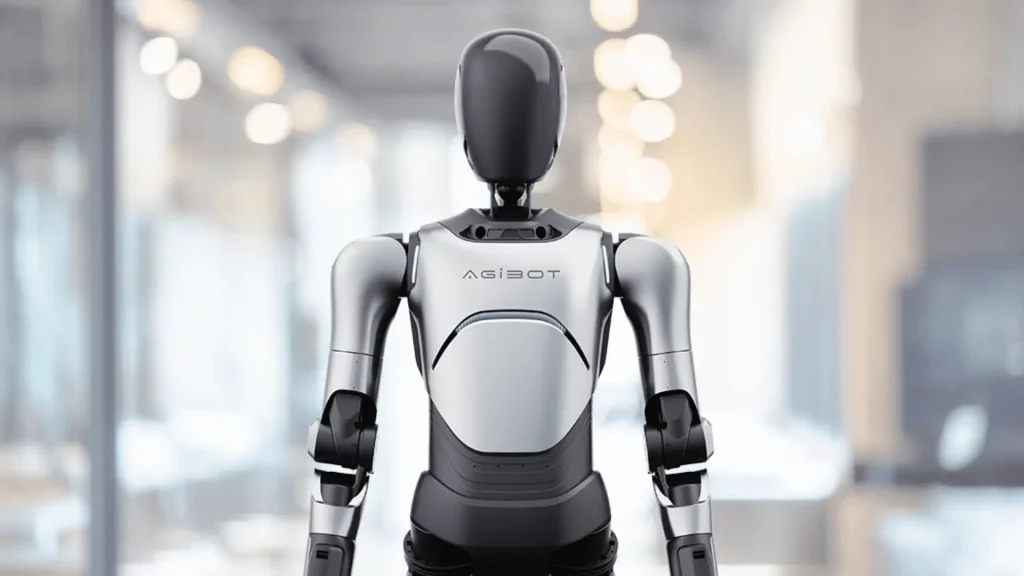
The AgiBot A2 measures 169 cm (5'9") tall, weighs 69 kg (standard model), has 40+ degrees of freedom, and can carry 3-5 kg per arm. Its 200 TOPS AI computing power and 700 Wh battery (2,000 Wh on the industrial A2-W variant) make it one of the most capable service humanoids available. Here's the complete spec breakdown:
AgiBot A2 Variants: Standard, Max, Ultra, and A2-W
AgiBot offers four A2 variants: Standard (69 kg, service-focused), Max (69 kg, enhanced payload), A2-W (2 kWh battery for industrial), and Ultra (performance flagship). This multi-variant strategy lets businesses choose hardware matched to their specific deployment scenario—a pragmatic approach that competitors like Tesla and Figure haven't yet replicated.
- A2 Standard — The core model at 69 kg, designed for service and reception roles. 700 Wh battery, ~2-hour runtime.
- A2-Max — Heavier build at 69 kg with enhanced payload capacity for light industrial tasks.
- A2-W (Industrial) — Purpose-built for manufacturing and warehouse work with a massive 2,000 Wh (2 kWh) battery pack for extended shifts on production lines.
- A2 Ultra — The performance flagship. At CES 2026, the A2 Ultra was showcased as a technological "Terracotta Warrior" that won a gold medal in group dance performance at the World Humanoid Robot Games, demonstrating breakthroughs in artistic expression and coordinated multi-robot intelligence.
AI and Software: WorkGPT and Genie Sim 3.0
The AgiBot A2 runs on WorkGPT, a proprietary multimodal AI achieving 96% accuracy in text, audio, and visual processing and 99% face wake-up rate. This makes the A2 one of the most capable humanoid robots for customer-facing interactions, even in noisy environments. Key capabilities include:
- 96% accuracy rate in text, audio, and visual input processing—even in noisy, crowded environments
- 99% face wake-up rate for natural, seamless interaction initiation
- Multimodal understanding — processes speech, gestures, facial expressions, and environmental context simultaneously
- Real-time decision-making via the 200 TOPS onboard compute, with cloud offloading for complex reasoning tasks
At CES 2026, AgiBot also debuted Genie Sim 3.0, its next-generation simulation platform. Ubergizmo awarded it Best of Show for connecting AgiBot's entire robotics portfolio with a unified software platform—enabling faster training, deployment, and fleet management.
AgiBot A2 Price: What Does It Cost?
💰 AgiBot A2 Pricing
The AgiBot A2 costs between $100,000 and $190,000 USD depending on variant. The Standard model starts around $100,000, the A2-Max ranges $130,000–$160,000, and the industrial A2-W with 2 kWh battery reaches $150,000–$190,000.
Pricing is one of the most searched topics around the AgiBot A2, and for good reason. Based on available data from Robozaps market research:
At $100,000–$190,000 depending on configuration, the AgiBot A2 sits in the mid-range of the humanoid robot cost spectrum. It's significantly more affordable than the Agility Robotics Digit (~$250,000) while offering more sophisticated AI interaction than the Unitree H1 ($90,000), which trades service intelligence for raw athletic performance.
AgiBot A2 vs. Competitors: Head-to-Head Comparison
The AgiBot A2 leads the humanoid market in commercial deployment volume (5,168+ units in 2025), degrees of freedom (40+), and service AI capability. However, Tesla Optimus targets a much lower $20K–$30K price point, and Unitree H1 offers better value for research applications at $90K. Here's how they compare:
Key takeaway: The AgiBot A2 leads in shipment volume and service-oriented AI, but Tesla's aggressive pricing targets and Unitree's affordability present different competitive angles. For businesses that need a deployable, commercially available humanoid right now, the A2 is one of very few options with proven scale.
Real-World Deployments and Use Cases
The AgiBot A2 is deployed across eight commercial applications in 2026: customer service, exhibitions, manufacturing, logistics, security, healthcare, education, and data collection. Unlike concept robots sitting in labs, the A2 has proven real-world utility across thousands of installations. Here's how it's being used:
1. Customer Service and Reception
The A2's primary commercial role. Its WorkGPT engine handles multilingual customer interactions with 96% accuracy, including noisy retail environments. Deployed in shopping malls, corporate lobbies, and exhibition centers across China.
2. Exhibition and Marketing
The A2's natural interaction capabilities and expressive motion make it a draw at trade shows, product launches, and brand activations. The A2 Ultra variant specifically demonstrated coordinated multi-robot performances at the World Humanoid Robot Games.
3. Manufacturing (A2-W Variant)
The industrial A2-W variant tackles flexible production lines with its extended battery life (2 kWh pack, 5+ hour runtime) and enhanced payload. Used for quality inspection, parts handling, and line-side assistance in Chinese manufacturing facilities.
4. Logistics and Warehousing
With 15 kg carrying capacity per arm and autonomous navigation via LiDAR + stereo cameras, the A2 handles sorting, inventory checks, and goods transport in warehouse environments.
5. Security and Inspection
The A2's 360° sensor suite enables autonomous patrol routes, anomaly detection, and real-time reporting—particularly in facilities that are too complex for wheeled security robots.
6. Healthcare and Elder Care
While still an emerging use case, the A2's gentle interaction capabilities and PLd-level safety systems make it suitable for guided therapy, patient engagement, and elderly care applications.
7. Education and Research
AgiBot's open-source ecosystem (including the Lingxi X1 research platform and AgiBot World dataset) positions the A2 as a research tool for universities developing next-generation robotics AI. See our guide on humanoid robots in education.
8. Data Collection
The A2's rich sensor array makes it an effective mobile data collection platform for spatial mapping, environmental monitoring, and training data generation for AI models.
AgiBot A2 Pros and Cons
Strengths
- Proven at scale — 5,168+ units shipped in 2025 alone, more than any competitor
- Excellent dexterity — 40+ DoF and visual fingertip sensors enable precision tasks like threading needles
- Best-in-class service AI — WorkGPT's 96% multimodal accuracy and 99% face wake-up rate
- Multiple variants — Standard, Max, Ultra, and A2-W cover different deployment needs
- PLd-level safety — Three-layer safety architecture with 360° perception
- Strong ecosystem — Genie Sim 3.0, AgiBot World dataset, open-source research platform
- Now available in 6 countries including the US (as of CES 2026)
- CES 2026 award winner — Multiple Best of CES recognitions from Forbes, Ubergizmo, MacStories, Netzwelt
Weaknesses
- Battery life is limited — 2 hours on the Standard model is restrictive for continuous operation
- Price is mid-range — At $100K–$190K, it's not accessible for small businesses
- Service-focused design — Not built for heavy-duty industrial lifting or rugged outdoor environments
- Limited Western deployment data — Most deployments have been in China; U.S./European track record is new
- No legs-only locomotion demos — Unlike Atlas or H1, we haven't seen aggressive terrain navigation or acrobatics
- Software ecosystem is Chinese-first — Documentation and developer community are still heavily Mandarin-oriented
CES 2026: AgiBot's Breakout Moment
AgiBot won multiple Best of CES 2026 awards at its U.S. debut, with Ubergizmo recognizing it as having "the most complete and operationally mature humanoid robot portfolio at the show." The company showcased its complete lineup—A2 Series, X2 Series (half-sized humanoid for entertainment), G2 Series (industrial/domestic), and D1 Series (quadruped).
Bloomberg reported that AgiBot topped the list of humanoid producers globally, while Forbes highlighted the A2 as "a bipedal humanoid intended for customer service or front desk reception duties" that was "already operational across eight core commercial applications."
Awards received at CES 2026:
- Ubergizmo Best of Show 2026
- Netzwelt Innovation Award 2026 (A2 + D1 Series)
- Global Top Brands — Global Emerging Brand Award
- MacStories Best of CES 2026 (A2 Series)
Who Should Buy the AgiBot A2?
The AgiBot A2 is best suited for enterprise service operations, manufacturing facilities, research institutions, and marketing/events companies—not small businesses or consumer home use. Here's who should consider it:
- Enterprise service operations — Hotels, malls, corporate campuses, exhibition centers needing premium customer-facing automation
- Manufacturers (A2-W) — Flexible production lines requiring human-robot collaboration without full factory redesign
- Research institutions — Universities and labs wanting a commercially-backed platform with real AI capabilities and an open-source ecosystem
- Marketing and events companies — Brands wanting a cutting-edge interactive experience at events and trade shows
It's not ideal for: warehouse-only logistics (Digit is purpose-built for that), consumer/home use (too expensive), or extreme environment deployments (not ruggedized).
AgiBot A2 Frequently Asked Questions
How much does the AgiBot A2 cost?
The AgiBot A2 costs between $100,000 and $190,000 USD depending on the variant and configuration. The Standard model starts around $100,000, the A2-Max ranges $130,000–$160,000, while the industrial A2-W variant with its 2 kWh battery can reach $150,000–$190,000. Contact AgiBot directly for exact quotes as pricing varies by region and volume.
Where can I buy the AgiBot A2?
The AgiBot A2 is available in China, the United States, Canada, Germany, Japan, and South Korea as of 2026. Following AgiBot's U.S. debut at CES 2026, North American distribution is expanding. You can also browse the A2 on Robozaps for pricing and availability.
What is the AgiBot A2 battery life?
The Standard A2 runs for approximately 2 hours on its 700 Wh battery with a 2-hour charge time. The industrial A2-W variant features a 2,000 Wh (2 kWh) battery pack for 5+ hours of continuous operation, designed for full manufacturing shifts.
How does the AgiBot A2 compare to Tesla Optimus?
The AgiBot A2 is commercially available now with 5,168+ units shipped, while Tesla Optimus remains in internal factory trials. The A2 excels in customer-facing service roles with superior AI interaction (96% multimodal accuracy via WorkGPT), while Optimus targets factory automation at a significantly lower price point ($20K–$30K target). See our full Tesla Optimus alternatives comparison.
Is the AgiBot A2 safe to work around?
Yes, the AgiBot A2 features PLd-level safety certification with a three-layer protection system (business, system, and hardware levels), 360° LiDAR, six HD cameras, and proximity detection. It's designed for safe human-robot interaction in public and workplace environments.
What tasks can the AgiBot A2 perform?
The A2 handles customer service, reception, exhibition presentations, marketing, manufacturing assistance, logistics sorting, security patrols, data collection, and research applications. Its 40+ degrees of freedom and visual fingertip sensors enable fine-manipulation tasks like threading needles or handling delicate objects.
How many AgiBot A2 robots have been sold?
AgiBot shipped an estimated 5,168 humanoid robots in 2025, making it the #1 humanoid producer globally by volume according to analyst firm Omdia. This includes A2 Series and other models in AgiBot's lineup.
What is AgiBot A2's degrees of freedom?
The AgiBot A2 has 40+ degrees of freedom (DoF), including 12 active DoF and 5 passive DoF per hand. This makes it one of the most dexterous humanoid robots available, capable of precise manipulation tasks.
How tall and heavy is the AgiBot A2?
The AgiBot A2 stands 169 cm (5'9") tall and weighs 69 kg for the Standard model or 69 kg for the A2-Max variant. Its dimensions are 175 × 60 × 40 cm.
Can the AgiBot A2 be used in the United States?
Yes, the AgiBot A2 became available in the United States following AgiBot's CES 2026 debut. It's also available in Canada, Germany, Japan, and South Korea. Contact AgiBot or check Robozaps for U.S. purchasing options.
Final Verdict: AgiBot A2 Review Score
The AgiBot A2 earns a 4.2/5 rating from Robozaps—it's one of the most significant humanoid robots of 2026 due to actual commercial deployment at scale, not just demos or promises. With 5,000+ units in the field, CES 2026 awards, a mature variant lineup, and genuine multimodal AI capabilities, it's no longer a question of whether the A2 works. The question is whether it's the right fit for your specific use case and budget.
Robozaps Rating: 4.2 / 5
- Design & Build: 4/5
- AI & Software: 4.5/5
- Dexterity & Movement: 4/5
- Value for Money: 4/5
- Commercial Readiness: 5/5
For a full ranking of the best humanoid robots in 2026, see our comprehensive comparison guide.
Related: AgiBot Lingxi X2 Review | How Much Does a Humanoid Robot Cost? | Tesla Optimus Alternatives
Ready to buy? Browse humanoid robots for sale on Robozaps.
Top Tesla Optimus alternatives for 2026. Compare Atlas, Figure 03, Unitree G1, Digit, NEO, Apollo & more with specs, prices, and deployment status.
The best Tesla Optimus alternatives in 2026 are Boston Dynamics Atlas (industrial/manufacturing), Agility Robotics Digit (logistics, deployed with Amazon), Unitree G1 (most affordable at $13,500), Figure 03 (home assistance), 1X NEO (home, pre-order open), and Apptronik Apollo (deployed at Mercedes-Benz). Each excels in different applications, and several are already shipping—unlike Optimus, which remains in limited production.
Tesla Optimus has become the most talked-about humanoid robot in the world—but it's far from the only one worth watching. As of January 2026, at least a dozen serious competitors are building, testing, and in many cases already deploying humanoid robots across factories, warehouses, and even homes. From Boston Dynamics' industrial-grade Atlas to the $13,500 Unitree G1, the landscape of Tesla Optimus alternatives and competitors has never been more competitive or diverse.
This guide breaks down every major Optimus rival: their specs, pricing, deployment status, and how they compare to Tesla's vision. Whether you're a robotics buyer, investor, or enthusiast, here's what you need to know about the humanoid robot market in 2026.
Key Takeaways
- Boston Dynamics Atlas leads for industrial applications with 50 kg payload (more than double Optimus) and IP67 weatherproofing
- Unitree G1 at $13,500 is the most affordable humanoid robot available—half Tesla's $30,000 target price
- Agility Robotics Digit is already deployed in Amazon warehouses via Robot-as-a-Service model
- Figure AI and 1X NEO are targeting home assistance—Tesla's long-term consumer play—with pre-orders open
- Chinese companies (Unitree, XPeng, AgiBot, Fourier) now produce half the major humanoid competitors, accelerating the global race
Where Does Tesla Optimus Stand in 2026?
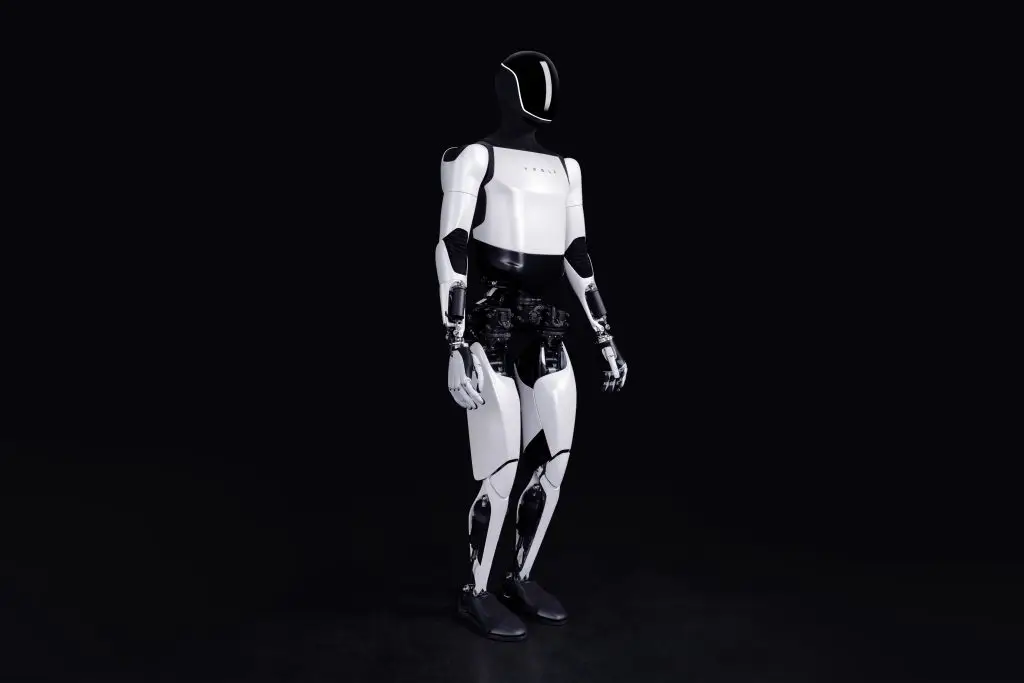
Before comparing alternatives, let's establish the baseline. Tesla Optimus (also known as Tesla Bot) is a general-purpose humanoid robot standing 5'8" (168 cm) tall, weighing 57 kg, with a 20 kg carrying capacity and a top walking speed of 5 mph (2.2 m/s). It's powered by the same AI stack behind Tesla's autonomous vehicles.
Key developments heading into 2026:
- In June 2025, Milan Kovac, the head of the Optimus program since 2022, resigned and was replaced by Ashok Elluswamy, Tesla's autopilot lead
- Limited production began in late 2025 with units deployed inside Tesla factories for sorting and material handling tasks
- Elon Musk announced in March 2025 that an Optimus robot would be sent to Mars aboard a SpaceX Starship in 2026
- The Generation 3 hands feature 22 degrees of freedom, up from 11 in Gen 2
- Pricing target: approximately $30,000 for consumer sales (not yet available)
Despite Tesla's massive brand power and AI capabilities, Optimus has faced persistent criticism about its reliance on teleoperation during demos. The "We, Robot" event in October 2024 drew scrutiny for not disclosing that operators were controlling the robots remotely. This transparency gap has given competitors an opening—many of whom are already shipping autonomous systems.
What Are the Top Tesla Optimus Alternatives and Competitors?
Here's a comprehensive look at every major humanoid robot challenging Tesla Optimus, organized by deployment readiness and market impact.
1. Boston Dynamics Atlas
Boston Dynamics, owned by Hyundai, retired its legendary hydraulic Atlas in April 2024 and unveiled an all-electric commercial Atlas designed for enterprise use. This is the most capable industrial humanoid on the market as of early 2026.
Key Specs:
- Height: 1.9 m (6'2")
- Weight: 90 kg (198 lbs)
- Payload: 50 kg instant / 30 kg sustained
- Degrees of Freedom: 56
- Battery Life: 4 hours with autonomous self-swapping
- Reach: 2.3 m (7.5 ft)
- Sensing: 360° cameras + tactile sensing
- IP Rating: IP67
- Operating Temp: -20° to 40°C
- Price: Not publicly disclosed (enterprise contracts)
Why It Competes: Atlas is the gold standard for humanoid robotics. Its 50 kg payload is more than double Optimus's 20 kg capacity. It can autonomously swap its own battery, navigate to charging stations, and deploy across fleets via Boston Dynamics' Orbit platform. It integrates with MES, WMS, and enterprise systems.
No other humanoid comes close in industrial robustness and reliability. Where Optimus is still proving its autonomy, Atlas is already being piloted at customer sites for material handling applications.
2. Figure 03 (Figure AI)
Figure AI has moved fast—from Figure 01 to Figure 02, and now Figure 03, their latest general-purpose humanoid. The company has pivoted toward home robotics, positioning Figure 03 as "the future of home help." Powered by Helix, Figure's proprietary AI system, the robot is designed to navigate unpredictable home environments.
Key Specs (Figure 02/03 lineage):
- Height: 5'6"
- Payload: 20 kg
- Speed: 1.2 m/s
- Runtime: 5 hours
- Cameras: 6 RGB cameras
- Compute: NVIDIA RTX GPU
- Hand DOF: 16
- Price: Not yet disclosed
Why It Competes: Figure AI raised approximately $1.7 billion in total funding at a $39 billion valuation (as of September 2025), making it one of the best-funded robotics startups in history. Backed by Microsoft, NVIDIA, Jeff Bezos, and OpenAI, Figure has moved from commercial/industrial applications to targeting the consumer home market.
This directly competes with Optimus's long-term consumer vision. Figure 02 was already deployed autonomously at BMW manufacturing facilities.
3. Unitree G1 and H1
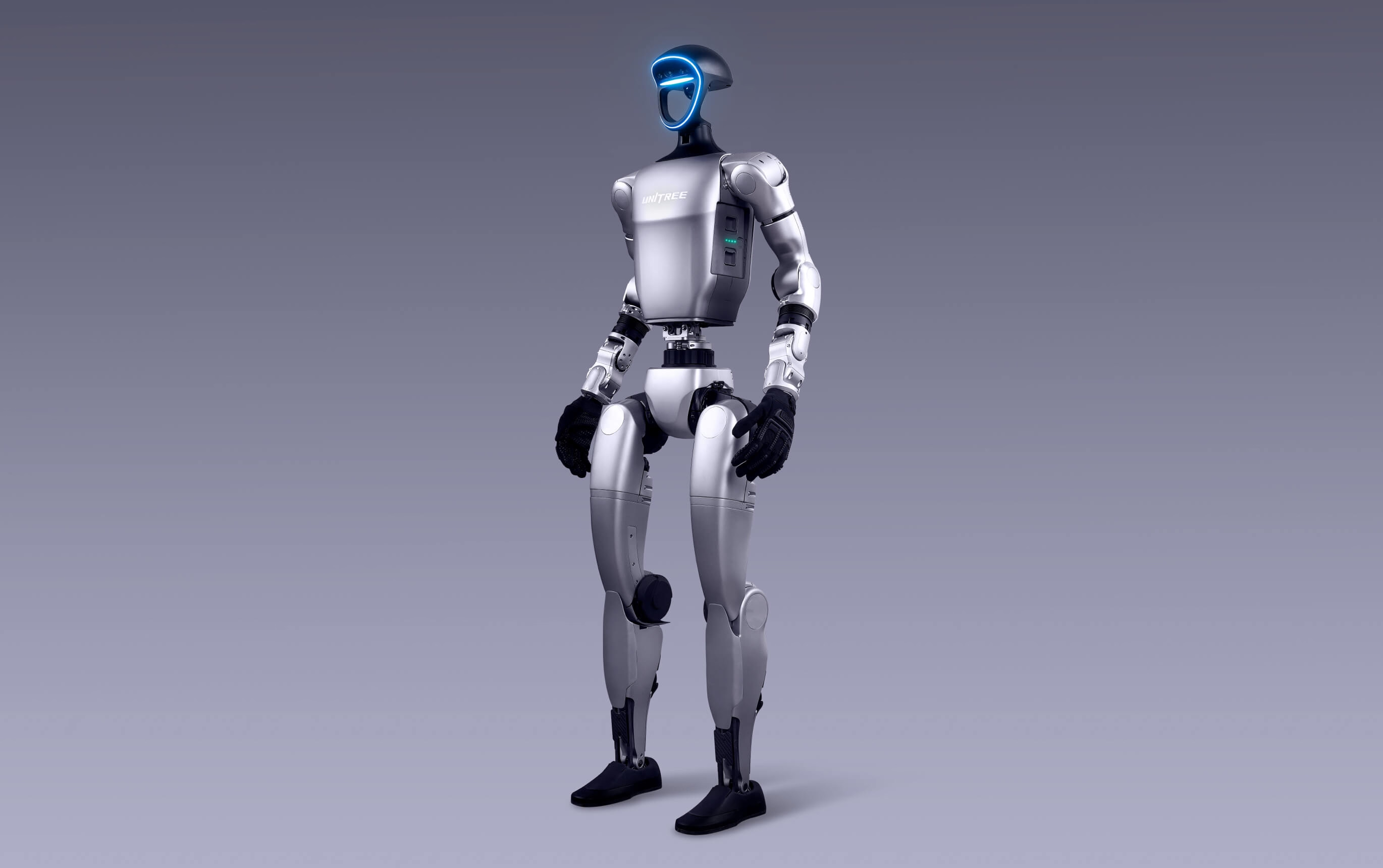
Chinese robotics company Unitree has disrupted the market with aggressively priced humanoid robots. The G1 is the most affordable humanoid robot commercially available, while the H1 targets more demanding research applications.
G1 Key Specs:
- Height: 132 cm (4'4")
- Weight: 35 kg
- Payload: 2 kg
- Speed: 2 m/s
- DOF: 23-43 (configuration dependent)
- Joint Torque: Up to 120 Nm
- Sensors: 3D LiDAR, depth cameras
- Price: Starting at $13,500
H1 Key Specs:
- Height: 180 cm (5'11")
- Weight: 47 kg
- Speed: 3.3 m/s (world record for humanoid running speed in 2024)
- DOF: 20+
- Price: ~$90,000
Why They Compete: At $13,500, the G1 costs less than a used car and opens humanoid robotics to researchers, small businesses, and educational institutions that could never afford an Optimus. The H1 set a world speed record for full-size humanoid running. Unitree's strategy of affordable, iterative hardware puts enormous pricing pressure on Tesla's $30,000 target.
4. Agility Robotics Digit
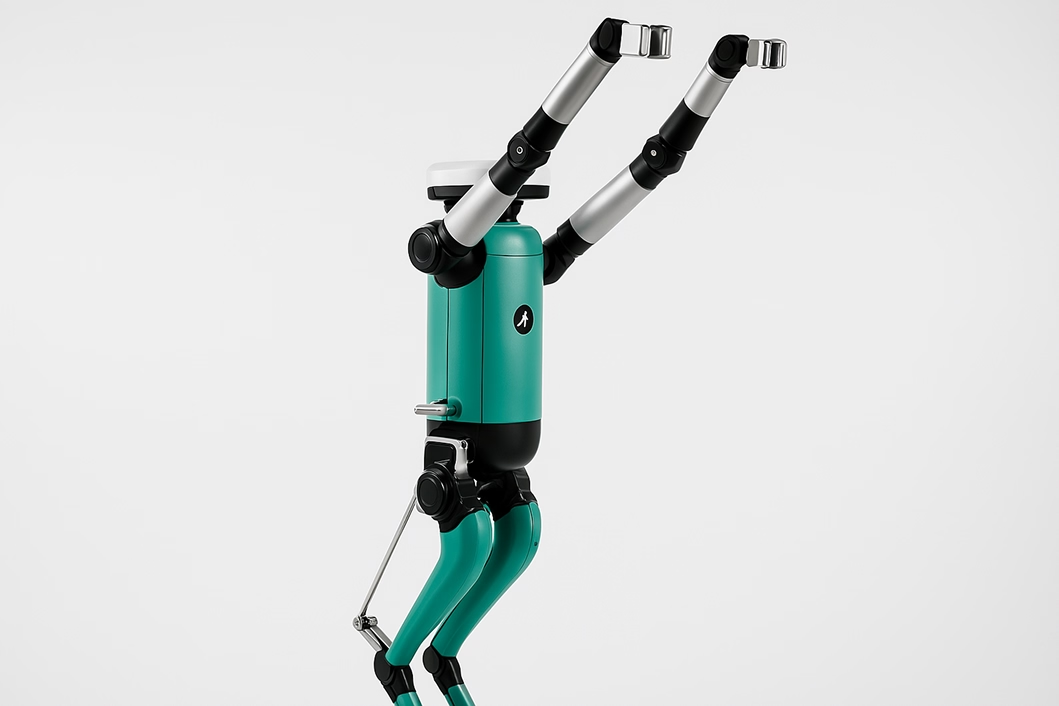
Agility Robotics Digit is arguably the most commercially advanced humanoid robot in logistics. The company opened RoboFab, the world's first humanoid robot factory, in Salem, Oregon, with capacity to produce 10,000 units per year.
Key Specs:
- Height: 165 cm (5'5")
- Payload: 16 kg
- Operational Reach: 5.5 ft
- Battery: Autonomous docking and charging
- Sensors: LiDAR, cameras, force/torque sensors
- End Effectors: Customizable for totes and packages
- Price: Offered via Robot-as-a-Service (RaaS) model
Why It Competes: Digit is deployed with Amazon and other logistics companies, handling real warehouse tasks today—not in demos. Its RaaS model means customers pay for uptime rather than buying a robot outright, lowering adoption barriers.
Agility's manufacturing scale (RoboFab) gives it a production advantage that Tesla is still building toward. For logistics-focused buyers, Digit is the proven choice over an unproven Optimus.
5. 1X NEO
Norwegian company 1X Technologies (backed by OpenAI) has taken a unique approach with NEO—a humanoid robot designed specifically for the home. NEO is available for pre-order with a $200 deposit as of early 2026.
Key Specs:
- Height: ~165 cm
- Weight: ~29 kg
- Actuation: Tendon-driven (soft and safe)
- Noise: Quieter than a modern refrigerator
- Safety: Deformable 3D lattice wrapping for cushioning
- AI: Full autonomy with "Expert Mode" remote learning
- Price: $200 deposit (full price TBD)
Why It Competes: NEO directly targets Optimus's long-term consumer play—home assistance. Its tendon-driven actuators make it inherently safer around people and pets compared to traditional rigid actuators.
The "Expert Mode" feature lets a 1X technician remotely guide NEO through new tasks, teaching it on the job. Backed by OpenAI, NEO has serious AI pedigree. If Tesla's consumer robot is years away, NEO could capture the home market first.
6. Apptronik Apollo
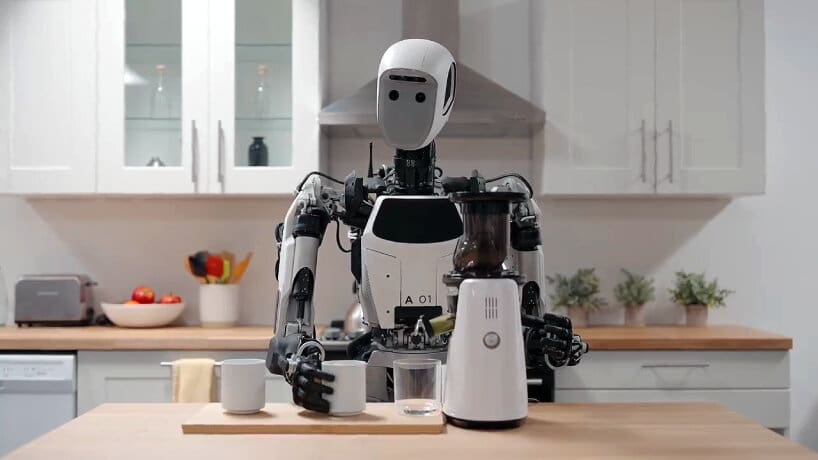
Austin-based Apptronik Apollo is a heavy-duty industrial humanoid already deployed on Mercedes-Benz assembly lines.
Key Specs:
- Height: 168 cm (5'6")
- Weight: 72.6 kg
- Payload: 25 kg (exceeds Optimus)
- Battery: 4 hours, hot-swappable
- Design: Modular, adaptable to different mobility platforms
- Safety: Force control architecture for safe human interaction
- Price: Enterprise pricing (not publicly available)
Why It Competes: Apollo's 25 kg payload beats Optimus's 20 kg, making it better suited for heavy industrial tasks. Its hot-swappable batteries eliminate downtime. Partnering with Mercedes-Benz gives it credibility that Tesla's own factory demos haven't fully matched. NASA has also shown interest in Apollo for space applications—another area Musk is eyeing with Optimus.
7. Sanctuary AI Phoenix
Canadian company Sanctuary AI takes a fundamentally different approach: instead of focusing on physical agility, Phoenix is built around general-purpose AI intelligence, aiming to be the world's first robot with human-like general intelligence.
Key Specs:
- Height: 170 cm (5'7")
- Weight: ~70 kg
- Hands: 21 DOF, industry-leading dexterity
- AI: Carbon™ AI system (proprietary)
- Approach: Teleoperation-to-autonomy pipeline
- Target: Retail, logistics, manufacturing
- Price: Enterprise (not disclosed)
Why It Competes: Sanctuary AI's Carbon system is one of the most ambitious AI control platforms in robotics. Phoenix's hands are among the most dexterous of any humanoid, capable of tasks like folding clothes and operating retail checkout systems. Sanctuary's approach of starting with teleoperation and gradually adding autonomy is pragmatic and mirrors what Tesla has been criticized for not being transparent about.
8. Fourier GR-3 (formerly GR-1/GR-2)
Shanghai-based Fourier Intelligence has iterated rapidly through its GR series, now on the GR-3. The company positions its robots as "the most accessible robot assistant" and has a strong presence in rehabilitation robotics.
Key Specs (GR-2 baseline):
- Height: 165 cm (5'5")
- Weight: 71 kg
- Payload: 5 kg per arm
- Speed: 2 m/s
- DOF: 55
- Battery: ~2 hours
- Price: ~$100,000 (estimated for research units)
Why It Competes: Fourier is one of the few companies with deep rehabilitation robotics expertise, giving it unique insight into human-robot physical interaction and safety. The GR-3 targets both healthcare and general-purpose applications. With backing from major Chinese investors, Fourier has the resources to scale. Its open developer platform makes it attractive for research institutions worldwide.
9. XPeng Iron
Chinese EV giant XPeng (which also makes electric cars and flying vehicles) entered the humanoid space with Iron, a robot designed to work alongside humans in its own manufacturing facilities.
Key Specs:
- Height: ~178 cm
- DOF: 60+ joints
- AI: Leverages XPeng's autonomous driving AI stack
- Status: Operational in XPeng factories
- Price: Not disclosed
Why It Competes: Like Tesla, XPeng is an EV company applying its autonomous driving AI to humanoid robotics—making it the closest structural competitor to Optimus. Iron is already working in XPeng's own factories, something Optimus is only beginning to do. With 60+ joints, it has exceptional articulation. XPeng's ability to cross-subsidize robot development with car revenue mirrors Tesla's exact strategy.
10. AgiBot A2
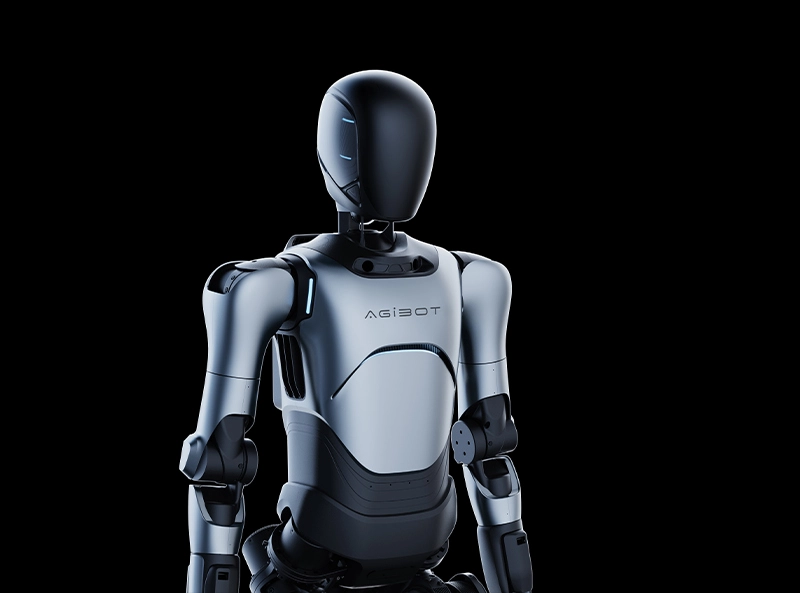
AgiBot A2 from Chinese startup AgiBot (backed by BYD and Hillhouse Capital) excels in service-oriented roles with impressive speed and multimodal AI.
Key Specs:
- Height: 165 cm (5'5")
- Weight: 55 kg
- Payload: 5 kg per arm
- Speed: 4.35 m/s (7 km/h)—one of the fastest humanoids
- DOF: 49
- Computing: 200 TOPS
- Sensors: Microphone array, LiDAR
- Price: Not publicly available
Why It Competes: AgiBot A2 processes text, audio, and visual input simultaneously, making it ideal for customer-facing roles like retail and hospitality. Its 4.35 m/s speed nearly doubles Optimus. For service industry applications—where interaction matters more than payload—A2 is a stronger choice than Tesla's robot.
11. UBTECH Walker X
Shenzhen-based UBTECH Robotics is one of China's largest humanoid robotics companies, publicly listed on the Hong Kong Stock Exchange. The Walker X is their flagship humanoid.
Key Specs:
- Height: 130 cm
- Weight: 71 kg
- DOF: 41
- Hands: Can manipulate objects, play chess, pour drinks
- Navigation: SLAM, visual recognition
- Price: Not publicly available (enterprise/research)
Why It Competes: UBTECH has the advantage of being publicly traded with steady revenue from its educational robotics line. Walker X has appeared at the Dubai Expo and various government showcases. While not as production-ready for industrial tasks as Atlas or Digit, UBTECH's financial stability and Chinese government backing make it a long-term competitor.
12. Xiaomi CyberOne
Consumer electronics giant Xiaomi unveiled CyberOne in 2022, signaling its intent to enter the humanoid space. While progress has been slower than rivals, Xiaomi's massive manufacturing scale is a wildcard.
Key Specs:
- Height: 177 cm (5'10")
- Weight: 52 kg
- DOF: 21 (arms and legs)
- AI: Emotion recognition, 3D spatial awareness
- Speed: 3.6 km/h
- Price: Estimated ~$100,000+ (prototype stage)
Why It Competes: Xiaomi has the manufacturing scale to mass-produce humanoids once the technology matures. Its supply chain expertise from smartphones and IoT devices could make it a serious cost competitor. However, CyberOne is still primarily a research platform with limited real-world deployment compared to leaders like Atlas and Digit.
How Do Tesla Optimus Alternatives Compare Head-to-Head?
How Do You Choose the Right Humanoid Robot?
With so many Tesla Optimus alternatives and competitors, the right choice depends on your use case:
- Heavy industrial / manufacturing: Boston Dynamics Atlas (highest payload, IP67 rated) or Apptronik Apollo (Mercedes-proven, 25 kg capacity)
- Warehouse logistics: Agility Robotics Digit (deployed with Amazon, RaaS model)
- Research and education: Unitree G1 ($13,500 entry point) or Fourier GR-3 (open developer platform)
- Home assistance: 1X NEO (designed for homes, soft/safe) or Figure 03 (Helix AI for home environments)
- Customer service / retail: AgiBot A2 (multimodal AI, fast) or Sanctuary AI Phoenix (industry-leading hand dexterity)
- General-purpose / mass market: Tesla Optimus (if/when available at $30,000) or XPeng Iron (similar EV-to-robot approach)
What Does the Humanoid Robot Market Look Like in 2026?
The humanoid robot market was valued at $2.92 billion in 2025 and is projected to reach $15.26 billion by 2030, with optimistic projections suggesting significant further growth over the following decade. Several trends are shaping this explosive growth:
- AI convergence: Large language models and vision-language models are giving robots the ability to understand natural language instructions, recognize objects, and learn new tasks from demonstration
- Cost reduction: Prices are falling fast. The Unitree G1's $13,500 price point was unthinkable two years ago. Tesla's $30,000 target would make humanoids accessible to small businesses
- China vs. U.S. competition: At least half the major humanoid robots come from Chinese companies (Unitree, XPeng, AgiBot, Fourier, UBTECH, Xiaomi). This geopolitical rivalry is accelerating innovation on both sides
- Robot-as-a-Service: Agility Robotics and others are pioneering subscription models that eliminate upfront costs, making adoption easier
- Vertical integration: Companies like Tesla and XPeng are leveraging their existing EV manufacturing, AI, and supply chain capabilities to build robots—a strategy that could dramatically lower costs
Frequently Asked Questions
What are the best Tesla Optimus alternatives in 2026?
The top Tesla Optimus alternatives in 2026 are Boston Dynamics Atlas (industrial), Figure 03 (home/general purpose), Agility Robotics Digit (logistics), Unitree G1 (affordable), 1X NEO (home), and Apptronik Apollo (manufacturing). Each excels in different applications.
How much does Tesla Optimus cost?
Tesla has targeted a price of approximately $30,000 for Optimus, though consumer sales have not yet begun as of January 2026. Limited production units are being used internally at Tesla factories. The most affordable alternative is the Unitree G1 at $13,500.
Which humanoid robot is already deployed in real factories?
Several humanoid robots are already deployed in real factories and warehouses: Agility Robotics Digit (Amazon warehouses), Apptronik Apollo (Mercedes-Benz assembly lines), XPeng Iron (XPeng factories), and Boston Dynamics Atlas (customer pilot sites). Tesla Optimus has limited internal deployment at Tesla facilities.
Is Boston Dynamics Atlas better than Tesla Optimus?
For industrial applications, Atlas currently surpasses Optimus in several key metrics: 50 kg payload (vs. 20 kg), 56 degrees of freedom, IP67 weatherproofing, and autonomous battery swapping. However, Atlas is an enterprise product with undisclosed pricing, while Tesla aims to mass-produce Optimus at ~$30,000. They target different market segments.
Which humanoid robot is best for home use?
As of January 2026, 1X NEO and Figure 03 are the leading home-oriented humanoid robots. NEO is available for pre-order ($200 deposit) with tendon-driven actuators designed for safe home interaction. Figure 03 uses the Helix AI system for navigating unpredictable home environments. Tesla Optimus also targets home use but is not yet available to consumers.
How many humanoid robot companies are there?
There are over 20 companies actively developing humanoid robots as of 2026, including Tesla, Boston Dynamics, Figure AI, Unitree, Agility Robotics, 1X Technologies, Apptronik, Sanctuary AI, Fourier, XPeng, AgiBot, UBTECH, and Xiaomi. The U.S. and China account for the majority of development activity.
Can I buy a humanoid robot right now?
Yes, several humanoid robots are commercially available in 2026. The Unitree G1 starts at $13,500 and is the most affordable option. The Unitree H1 sells for around $90,000. 1X NEO accepts $200 deposits for pre-order. Enterprise options like Digit and Apollo are available through direct sales or Robot-as-a-Service models.
Related: The Most Advanced Humanoid Robot You Can Buy Right Now · Tesla Optimus Gen 2 Review · Best Humanoid Robots
Ready to buy? Browse humanoid robots for sale on Robozaps.
Most advanced humanoid robots you can actually buy in 2026. Top 10 ranked by capability, with specs, prices & where to purchase.
In 2026, humanoid robots have crossed from sci-fi fantasy into commercial reality. You can actually buy one — not just watch a demo video. From the $13,500 Unitree G1 to six-figure industrial platforms from Boston Dynamics and Figure AI, the market now offers humanoid robots across every price point and use case. Whether you want a research platform, a factory worker, or an early home assistant, there's a humanoid robot you can purchase today.
This guide breaks down every advanced humanoid robot available for purchase in 2026, with real specs, actual prices, and honest assessments of what each can and can't do. We've compared them head-to-head so you can make an informed decision.
Quick Comparison: Best Humanoid Robots You Can Buy in 2026
Before diving into each robot, here's how the top contenders stack up:
Best Budget Pick: Unitree G1 ($13,500)
The Unitree G1 is the most affordable humanoid robot on the market — and it's legitimately good. Starting at $13,500 for the base model and around $30,000+ for the G1 EDU variant with additional degrees of freedom and dexterous hands, it's the entry point into humanoid robotics.
Unitree G1 Key Specs
- Height: 132 cm (compact form factor, folds to 69 cm)
- Weight: ~35 kg
- Degrees of Freedom: 23 (base) to 43 (EDU with dexterous hands and extra wrist/waist DOF)
- Arm Payload: 2 kg (base), 3 kg (EDU)
- Max Knee Torque: 90 N·m (base), 120 N·m (EDU)
- Battery: 9000 mAh, ~2 hours runtime, quick-release swap
- Sensors: Depth camera, 3D LiDAR, 4-microphone array, 5W speaker
- Connectivity: WiFi 6, Bluetooth 5.2
- Computing: 8-core CPU (base), NVIDIA Jetson Orin available on EDU
The G1 is built for research and education. It walks, balances, and manipulates objects. The EDU variant adds the Dex3-1 three-fingered dexterous hand with force control and optional tactile sensor arrays, plus extra wrist and waist DOF for more human-like movement. Every joint uses industrial-grade crossed roller bearings and low-inertia PMSM motors.
It's widely available through resellers including RobotShop and directly from Unitree. Secondary development is supported on the EDU model with comprehensive documentation. If you want to get into humanoid robotics without a six-figure budget, the G1 is your best option.
Unitree H1: Full-Size Research Platform
Unitree's bigger sibling, the H1, is a full-height (180 cm) humanoid that made headlines in 2024 for its speed — clocking 3.3 m/s (nearly 12 km/h) in walking tests, making it one of the fastest bipedal robots. At ~47 kg, it's relatively lightweight for a full-size humanoid.
The H1 targets research institutions and enterprise customers. Pricing sits in the $90,000–$150,000 range depending on configuration. It shares Unitree's modular design philosophy and is available to order through their sales team or via Robozaps.
AgiBot A2: China's AI Powerhouse
The AgiBot A2 remains one of the most technically impressive humanoid robots you can purchase in 2026. With 49 degrees of freedom, 200 TOPS of onboard computing power, and a 10 kg dual-arm payload, it combines serious hardware with sophisticated AI.
AgiBot A2 Key Specs
- Height: 175 cm
- Weight: 55 kg
- DOF: 49 (exceptional dexterity)
- Payload: 10 kg total (5 kg per arm)
- Speed: 1.94 m/s (7 km/h)
- AI Compute: 200 TOPS — processes text, audio, and visual data in real time
- Sensors: LiDAR, depth cameras, microphone array
- Battery: ~2 hours with hot-swappable packs
AgiBot (backed by investors including BYD and Hillhouse Capital) had produced 962 units as of December 2024. It's used by companies like BYD and SAIC Motor for factory automation, and in customer-facing roles like reception and retail guidance. Its 200 TOPS AI enables tasks as delicate as threading a needle.
The A2 Max variant pushes the envelope further: 40 kg payload and 67 degrees of freedom for heavy-duty industrial work. AgiBot founder Peng Zhihui envisions home use within 5–8 years.
Available through resellers like Latin Satelital and Europa Satellite. Contact Robozaps for a quote.
Fourier GR Series: From Rehab Robotics to Humanoids
Fourier Intelligence, originally known for rehabilitation robotics, has emerged as a serious humanoid player with three generations:
- Fourier GR-1: 165 cm, 55 kg, 40+ DOF, 50 kg payload. Their first-gen humanoid, already shipping to research partners. Known for high payload capacity relative to weight.
- Fourier GR-2: Second-generation with improved dexterity, better AI integration, and refined motion control. Upgraded actuators and sensor suite.
- Fourier GR-3 Series: Latest generation announced in late 2025, featuring enhanced AI reasoning and more fluid movement. Details still emerging.
Fourier's strength is their background in precise biomechanical movement from medical robotics. Their humanoids move with unusually smooth, human-like gait. Pricing is in the $100,000+ range for enterprise and research customers. Available through their sales channels.
Figure 03: The AI-First Humanoid
Figure 03 from Figure AI represents the latest generation of their humanoid platform, launched in October 2025. Backed by approximately $1.7 billion in funding across multiple rounds from investors including Microsoft, NVIDIA, Intel, and others. Note: Figure AI's partnership with OpenAI ended in February 2025; the company now uses its proprietary Helix VLA model.
Figure 03 Key Specs
- Height: 170 cm
- Weight: 70 kg
- DOF: 40+ (16 DOF per hand)
- Payload: 25 kg
- Battery: 2.25 kWh, 5+ hours operational
- AI: Helix VLA (proprietary vision-language-action model), on-device inference, voice interaction
- Speed: 1.2 m/s
Currently deployed at BMW's U.S. manufacturing plant in Spartanburg, South Carolina, where it performs assembly and material transport tasks. The robot understands spoken instructions, plans multi-step tasks, and learns from demonstration.
The catch: Figure 03 is not available for open purchase. It's enterprise-only, deployed to commercial partners through Figure AI's sales pipeline. If you're a manufacturer or logistics company, you can inquire. Individual buyers — not yet.
Apptronik Apollo: The Industrial Heavyweight
Apptronik Apollo is designed for one thing: getting work done in factories. With a 25 kg payload and 4-hour battery life, it's built for full-shift industrial operation.
Apollo Key Specs
- Height: 168 cm
- Weight: 73 kg
- Payload: 25 kg
- Battery: ~4 hours (swappable)
- Focus: Safety-first design, smooth joint motion, force control
Apollo is operational at Mercedes-Benz assembly lines and has partnerships with NASA and other major enterprises. Apptronik emphasizes safety and ergonomic design — the robot is built to work directly alongside humans without safety cages.
Available for enterprise purchase. Listed on Robozaps — contact sales for pricing.
Boston Dynamics Atlas (Electric): The Athletic Prodigy
Boston Dynamics retired the iconic hydraulic Atlas in April 2024 and unveiled a fully electric replacement. The new Atlas is designed for real commercial work — not just viral parkour videos.
Electric Atlas Highlights
- Fully electric actuation — broader range of motion than the hydraulic version
- Enhanced joints — stronger, more energy-efficient
- AI-powered: Embedded machine learning for real-time motion planning
- Deployment: Hyundai Motor manufacturing plants (Hyundai owns Boston Dynamics)
Atlas is being positioned for heavy material handling — the tasks that are too physically demanding or dangerous for human workers. It can jump, spin, and manipulate tools with agility unmatched by any competitor.
Availability is enterprise-only through Boston Dynamics' commercial programs. No public pricing, but expect premium six-figure territory. BD also offers their Spot quadruped robot (~$75,000) for those who want Boston Dynamics technology at a lower entry point.
Tesla Optimus: The Mass-Market Promise
Tesla Optimus (Gen 2) is the most talked-about humanoid robot in the world — and the one most likely to become affordable at scale. Elon Musk has stated a target price of around $30,000, which would make it comparable to an economy car.
Tesla Optimus Gen 2 Specs
- Height: 168 cm
- Weight: 57 kg
- DOF: 40+ (11 per hand)
- Battery: 2.3 kWh (full workday operation)
- AI: Tesla FSD (Full Self-Driving) neural networks adapted for robotics
- Navigation: Camera-based, leveraging Tesla's vision AI stack
Status as of early 2026: Optimus is in active testing at Tesla factories performing material handling and basic assembly tasks. Tesla has demonstrated walking, object manipulation, and laundry folding at AI Day events. Limited external sales may begin in 2026, but Optimus is not yet commercially available to the general public.
The opportunity here is massive. If Tesla achieves mass production — leveraging the same manufacturing scale that produces millions of cars — Optimus could be the first humanoid robot that ordinary consumers can afford. But for now, it remains a "coming soon" product. Check availability on Robozaps.
1X NEO: The Home Robot Contender
1X Technologies (backed by OpenAI) is building NEO specifically for the home — not factories. At just 30 kg and 165 cm, it's designed to be lightweight, safe, and approachable around people and pets.
NEO uses a novel actuator design focused on safe human-robot interaction. Unlike industrial humanoids with rigid metal frames, NEO incorporates compliant mechanisms that yield on contact — critical for a robot that shares living space with children.
Status: NEO entered beta testing in late 2025 with select households. Public pricing hasn't been announced, but 1X has indicated it will be priced for the consumer market (likely $20,000–$50,000 range). Early access may expand through 2026.
Sanctuary AI Phoenix: General-Purpose Intelligence
Sanctuary AI's Phoenix robot takes a different approach — focusing on general-purpose AI that mimics human cognition. Their "Carbon" AI system is designed to understand and perform virtually any manual task a human can do, without task-specific programming.
Phoenix Specs
- Height: ~170 cm
- Weight: ~70 kg
- Payload: 25 kg
- AI: Carbon — general-purpose AI mimicking human cognition
- Hands: Highly dexterous, capable of fine manipulation
Phoenix is orderable online for enterprise customers. Sanctuary AI has partnerships with companies like Magna International for automotive manufacturing. Their pitch is that Phoenix can learn any new task in hours rather than weeks — dramatically reducing deployment time compared to traditional automation.
Other Notable Humanoid Robots Worth Watching
Agility Robotics Digit
Digit is a logistics-focused humanoid built to move boxes and totes in warehouses. It works with Amazon in their fulfillment centers. Standing about 175 cm with bird-like legs optimized for walking and carrying, Digit handles up to 16 kg. Available for enterprise deployment.
UBTECH Walker S
Chinese robotics company UBTECH offers the Walker S series — full-size humanoids with dexterous manipulation capabilities. UBTECH has deployed units in NIO's car factory and various exhibition settings. Available for enterprise purchase.
Xpeng Iron
EV maker Xpeng debuted its Iron humanoid robot, leveraging autonomous driving AI for robotic navigation. Still in early commercialization stages as of 2026.
Kepler Forerunner
Kepler Robot's Forerunner series targets industrial applications with competitive pricing for the Chinese market. Multiple units deployed in manufacturing settings.
Unitree R1 ($4,900 — Cheapest Humanoid Robot for Sale)
The Unitree R1 is the most affordable humanoid robot ever offered, starting at $4,900. Standing up to 1.23m tall and weighing about 29 kg, the R1 can run, cartwheel, and recover from falls autonomously. With an open SDK and developer-friendly design, the R1 targets AI researchers and robotics hobbyists who want programmable humanoid hardware at a fraction of the G1's price. Currently in pre-sale with shipments expected April 2026 — check availability on Robozaps.
How to Choose the Right Humanoid Robot for Sale
Choosing depends on your use case and budget:
The Humanoid Robot Market in 2026: Key Trends
The humanoid robotics market was valued at $2.92 billion in 2025, growing at a 39.2% CAGR to $15.26 billion by 2030 (MarketsandMarkets). Several trends are driving this explosion:
- China's manufacturing surge: Companies like Unitree, AgiBot, Fourier, UBTECH, and Xpeng are mass-producing humanoids at price points that undercut Western competitors. China aims to mass-produce humanoid robots by 2027 per government industrial policy.
- AI breakthroughs: Vision-language models (OpenAI, Google DeepMind) enable robots to understand instructions, plan tasks, and learn from demonstration — fundamentally changing what robots can do.
- Automotive industry adoption: BMW (Figure), Mercedes-Benz (Apptronik), Hyundai (Boston Dynamics), and BYD (AgiBot) are leading early adoption, validating humanoid robots in real production environments.
- Falling costs: The Unitree G1 at $13,500 would have been unthinkable two years ago. As production scales, prices will continue dropping.
- Home robotics horizon: 1X NEO and Tesla Optimus signal that humanoid robots for the home are 2–5 years away from mainstream availability.
Frequently Asked Questions
What is the most advanced humanoid robot you can buy in 2026?
The AgiBot A2 is the most technically advanced humanoid robot currently available for purchase, with 49 degrees of freedom and 200 TOPS of AI computing power. For budget buyers, the Unitree G1 starts at $13,500 and ships immediately. For enterprise customers, Figure 03 and Apptronik Apollo offer proven deployments at BMW and Mercedes-Benz.
How much does a humanoid robot cost?
Prices range from $13,500 for the Unitree G1 base model to $100,000+ for enterprise platforms like the Fourier GR-1 or Apptronik Apollo. Tesla aims to price Optimus around $30,000 when it reaches mass production. Most full-size industrial humanoids fall in the $50,000–$200,000 range. See our full humanoid robot price guide for details.
Can you buy a humanoid robot for home use?
Not quite yet, but it's close. The Unitree G1 can technically be used at home and costs $13,500, though it's designed for research. 1X NEO is specifically designed for home use and is in beta testing. Tesla Optimus is targeting the consumer market but isn't available yet. Expect viable home humanoid robots by 2027–2028.
Which humanoid robot is best for research?
The Unitree G1 EDU is the best value for research — affordable, open for secondary development, and available with NVIDIA Jetson Orin compute. For more advanced research, the Fourier GR-1/GR-2 offers higher payload and more sophisticated motion capabilities at a higher price point.
Is Tesla Optimus available to buy?
As of early 2026, Tesla Optimus is not available for public purchase. It's being tested internally at Tesla factories. Elon Musk has stated a target price around $30,000 and plans for mass production, but no firm consumer sales date has been announced. Check current status on Robozaps.
What's the cheapest humanoid robot you can buy?
The Unitree R1 starting at $4,900 (currently in pre-sale, shipping April 2026) is now the cheapest humanoid robot for sale — it can run, cartwheel, and is developer-friendly. For a more capable platform, the Unitree G1 at $13,500 offers more DOF, dexterous hands (EDU), and broader research capabilities.
Where can I buy a humanoid robot?
You can buy humanoid robots through manufacturer websites (Unitree, AgiBot), authorized resellers (RobotShop, Roboworks), and specialized marketplaces. Robozaps lists all available humanoid robots for sale with pricing, specs, and direct purchase links. For enterprise models like Figure 03 or Apollo, contact manufacturers directly.
Are AI robots for sale to consumers?
Yes — several AI robots are for sale to individual buyers in 2026. The Unitree G1 ($13,500) and R1 ($4,900) ship to consumers worldwide. For home-focused AI robots, 1X NEO is in beta testing with consumer pricing expected. Tesla Optimus targets under $20,000 but isn't available yet. See our full list of humanoid robots you can buy.
Conclusion: Which Humanoid Robot Should You Buy?
The humanoid robot market in 2026 has something for everyone — if you know where to look:
- Best overall for purchase today: AgiBot A2 — unmatched dexterity (49 DOF), powerful AI (200 TOPS), and actually in production with 962 units manufactured.
- Best budget option: Unitree G1 — $13,500 gets you a real humanoid robot with LiDAR, depth cameras, and expandable compute.
- Best for factories: Apptronik Apollo or Figure 03 — proven in real manufacturing at Mercedes-Benz and BMW.
- Most anticipated: Tesla Optimus — if it hits mass production at around $30,000, it changes everything.
Ready to buy a humanoid robot? Browse humanoid robots for sale on Robozaps or contact our sales team for expert guidance on the right robot for your needs.
Related: How Much Does a Humanoid Robot Cost in 2026? Complete Price Guide · Tesla Optimus Alternatives and Competitors
Get the latest robotics news delivered to your inbox
Improve your crypto earnings automatically. Use Robozaps to compare rates and rewards.