![Figure 02 Review: Price, Specs & BMW Deployment Data [2026]](https://cdn.prod.website-files.com/67ea6793adf74f7d3087e4e4/6981e78734675166b8d7457a_doJLUX9.png)
The Figure 02 isn't just another humanoid robot prototype gathering dust in a lab — it's the machine that helped build 30,000 BMW X3 vehicles on an active assembly line in Spartanburg, South Carolina. Backed by a staggering $39 billion company valuation and powered by the proprietary Helix AI foundation model, Figure AI's second-generation humanoid has proven what most competitors are still only promising: real-world industrial deployment at scale. But with an estimated price tag of $30,000–$150,000 and a successor (Figure 03) already announced, is the Figure 02 still worth your attention in 2026? This comprehensive Figure 02 review breaks down every specification, real-world performance metric, pricing detail, and competitive comparison you need to make an informed decision.
Key Takeaways
- Price: The Figure 02 is estimated at $30,000–$150,000 depending on configuration, positioning it between Tesla Optimus's consumer-friendly target and Boston Dynamics Atlas's premium $420,000 price point.
- Proven Factory Deployment: Contributed to the production of 30,000+ BMW X3 vehicles over 11 months at BMW's Spartanburg plant — 1,250+ hours of runtime with 90,000+ parts loaded.
- Helix AI Foundation Model: End-to-end neural network that maps vision directly to motor action, enabling generalized task learning without traditional programming.
- 5-Hour Battery Life: The 2.25 kWh custom battery pack delivers 50% more energy than Figure 01, enabling full 10-hour shifts with a mid-shift swap.
- Best For: Manufacturing facilities, automotive assembly lines, and logistics operations looking for a proven humanoid platform with real deployment data — not just demos.
- Key Limitation: Figure AI has officially begun retiring Figure 02 in favor of Figure 03, meaning new buyers face a platform at end-of-life with uncertain long-term support.
Figure 02 Specifications
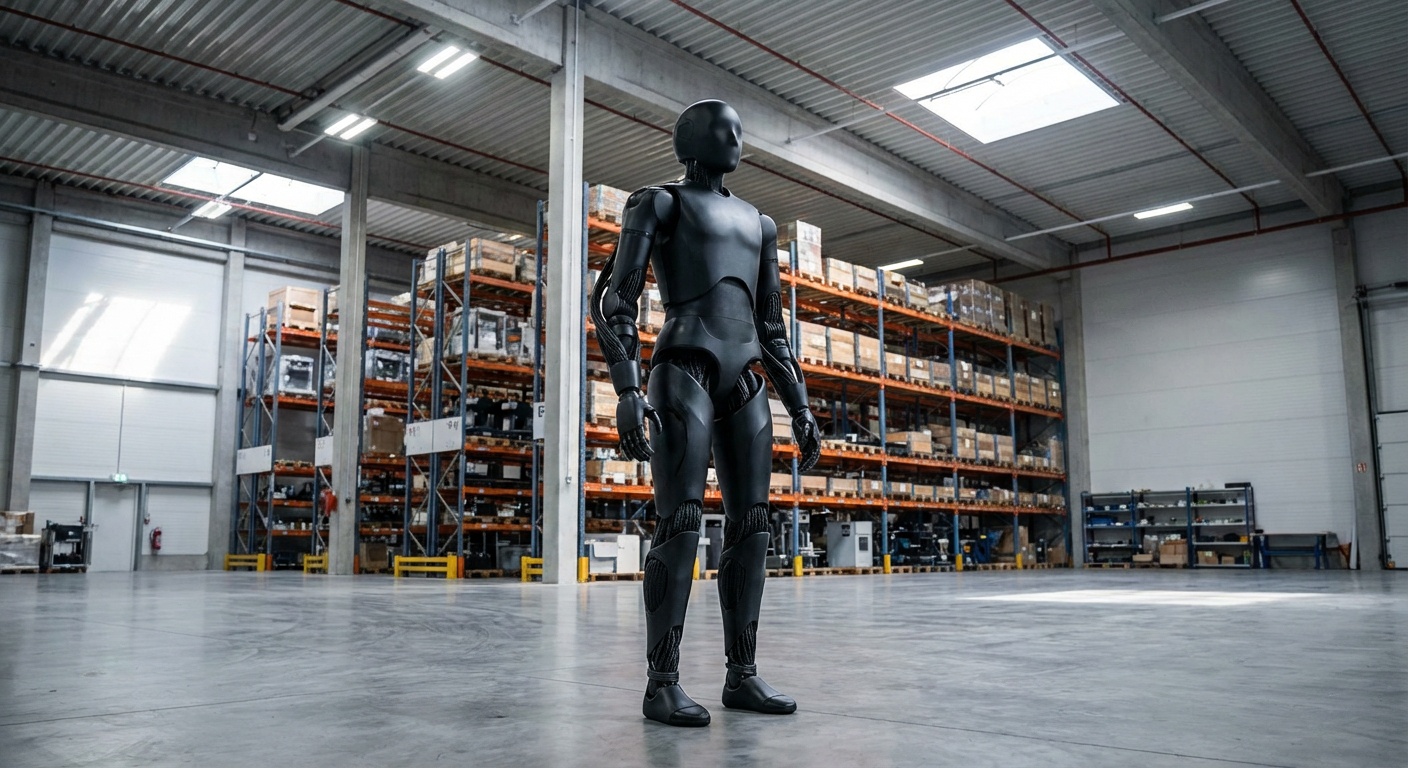
The Figure 02 — Figure AI's second-generation humanoid robot built for industrial deployment.
| Specification | Figure 02 |
|---|---|
| Height | 168 cm (5 ft 6 in) |
| Weight | 70 kg (154 lbs) |
| Degrees of Freedom (Total) | 28 (body) + 32 (hands) = 60 total |
| Arm DOF (each) | Not disclosed |
| Leg DOF (each) | Not disclosed |
| Hand DOF (each) | 16 (five-fingered, human-equivalent dexterity) |
| Payload Capacity | 20 kg (44 lbs) body / 25 kg (55 lbs) per hand |
| Walking Speed | 1.2 m/s (4.3 km/h / 2.7 mph) |
| Running Speed | Not disclosed |
| Max Joint Torque | Not disclosed |
| Battery Capacity | 2.25 kWh (custom pack) |
| Battery Life | ~5 hours |
| Battery Type | Custom lithium, torso-integrated, swappable |
| Sensors | 6× RGB cameras, microphones, speakers, force-torque, IMU |
| LiDAR | None (vision-only approach) |
| Cameras | 6× RGB cameras (360° coverage) |
| Actuation | Electric — custom motors with integrated joint drivetrains |
| Computing | Dual NVIDIA RTX GPU modules (3× inference vs Figure 01) |
| OS / SDK | Helix AI Foundation Model (proprietary) |
| IP Rating | Not disclosed |
| Operating Temp | Not disclosed |
| Connectivity | Wi-Fi, onboard speakers and microphones |
| Release Year | 2024 |
| Country of Origin | United States |
| Estimated Price | $30,000–$150,000 (estimated) |
| Availability | Enterprise/industrial only — contact sales (retirement announced) |
Figure 02 Price: What Does It Actually Cost?
Pricing for the Figure 02 has never been officially published by Figure AI. The company operates on a contact-sales model, typical of enterprise robotics platforms. Based on industry analysis, third-party estimates, and comparison to similar platforms, the Figure 02 price falls in the $30,000–$150,000 range depending on configuration, deployment support, and volume commitments.
The wide range reflects the reality of enterprise humanoid pricing in 2026: base hardware costs are coming down rapidly, but integration, training, customization, and ongoing support contracts can multiply the sticker price several times over. A single Figure 02 unit for pilot testing likely sits closer to $100,000–$150,000, while fleet pricing for large-scale deployments (like the BMW partnership) would push per-unit costs significantly lower.
Here's how the Figure 02 price compares across the broader humanoid robot market:
| Robot | Estimated Price | Height | Notes |
|---|---|---|---|
| Tesla Optimus Gen 2 | $20,000–$30,000 (target) | 173 cm (5'8") | Lowest target price; not yet commercially available |
| Unitree G1 | $16,000–$27,000 | 127 cm (4'2") | Budget option; smaller form factor |
| Figure 02 | $30,000–$150,000 | 168 cm (5'6") | Proven BMW deployment; enterprise-only |
| Agility Digit | ~$250,000 (pilot) | 175 cm (5'9") | Amazon partnership; warehouse-focused |
| Apptronik Apollo | ~$50,000–$250,000 | 172 cm (5'8") | NASA heritage; modular design |
| Sanctuary AI Phoenix | ~$50,000–$100,000 | 170 cm (5'7") | Carbon AI brain; strongest dexterity claims |
| Boston Dynamics Atlas (Electric) | ~$420,000 | 150 cm (4'11") | Premium; Google DeepMind AI partnership |
At its estimated price point, the Figure 02 occupies a compelling middle ground. It's significantly more affordable than the Agility Digit ($250,000) and Boston Dynamics Atlas ($420,000), while offering something those platforms haven't publicly demonstrated: over 1,250 hours of continuous factory deployment with measurable production output. For enterprise buyers evaluating ROI, the Figure 02's proven track record at BMW may justify a premium over cheaper but unproven alternatives.
That said, with Figure 03 now announced and Figure 02 entering retirement, prospective buyers should negotiate aggressively. End-of-life platforms typically come with significant discounts — but also reduced long-term support commitments. We'd recommend clarifying the software update roadmap and spare parts availability before signing any contracts.
Performance and Mobility: Real-World Testing
The Figure 02's performance story is unique in the humanoid robot market: it's one of the only platforms with verified, long-duration industrial deployment data. While competitors showcase impressive demo videos, Figure AI has published concrete KPIs from 11 months at BMW's Spartanburg plant.
Powered by custom electric motors with integrated joint drivetrains, the Figure 02 demonstrates the following real-world capabilities:
- Walking Speed: 1.2 m/s (4.3 km/h / 2.7 mph) — adequate for factory floor navigation, though slower than Agility Digit's 1.5 m/s (5.5 km/h) or Tesla Optimus's targeted 1.4 m/s (5 km/h).
- Operational Endurance: Ran 10-hour shifts Monday through Friday at BMW, with battery swaps enabling continuous operation. The 2.25 kWh battery delivers approximately 5 hours per charge.
- Parts Handling: Loaded 90,000+ sheet-metal parts across 1,250+ hours of runtime, averaging approximately 72 parts per hour under production conditions.
- Placement Accuracy: Achieved the target of greater than 99% correct placement per shift, placing parts within a 5-millimeter tolerance in approximately 2 seconds per placement.
- Locomotion Distance: Estimated 1.2+ million robot steps covering 200+ miles (320+ km) over the deployment period.
- Cycle Time Performance: Met the 84-second total cycle time requirement, with 37-second load times, matching the pace required for BMW's X3 assembly line.
The engineering achievement here isn't raw speed or strength — it's reliability. Placing sheet-metal parts within 5mm tolerance thousands of times per day, shift after shift, is the kind of boring-but-critical performance that separates production-ready robots from impressive prototypes. Figure AI reported "minimal hardware failures" across the entire deployment, with the forearm identified as the primary failure point — a learning that directly informed Figure 03's redesigned wrist electronics.
From reviewing the deployment data, the Figure 02's mobility is tuned for precision over speed. The 1.2 m/s walking speed won't win any races, but it enables the "precise yet adaptive locomotion" that Figure AI describes as essential for rapid, accurate foot placement in changing factory environments. This is a robot optimized for the real world, not for YouTube highlights.
Sensors and Perception
The Figure 02 takes a distinctly vision-first approach to perception, eschewing LiDAR (commonly used by competitors like Agility Digit and Boston Dynamics Atlas) in favor of a camera-centric sensor suite:
- 6× RGB Cameras: Positioned for 360-degree visual coverage, these cameras serve as the primary input for the Helix AI system. The vision-only approach mirrors Tesla's strategy with Full Self-Driving — betting that neural networks can extract sufficient spatial understanding from cameras alone.
- Force-Torque Sensors: Integrated into the hands and arms for precise manipulation feedback. These enable the 5mm placement accuracy demonstrated at BMW by providing real-time force data during part insertion and placement.
- IMU (Inertial Measurement Unit): Standard for balance and orientation tracking during locomotion. Essential for the adaptive foot placement required on factory floors.
- Microphones and Speakers: Onboard audio hardware enables natural language interaction through OpenAI's speech-to-speech voice integration. Workers at BMW could issue verbal commands to the robot.
The absence of LiDAR is a deliberate architectural choice. LiDAR adds cost, weight, power consumption, and another failure point. By relying entirely on vision and AI inference, Figure AI can keep the sensor hardware simpler while pushing complexity into software — software that can be updated and improved over-the-air. The trade-off is that camera-only systems can struggle in low-light conditions and may have less precise depth perception than LiDAR at extreme ranges, though these limitations are less relevant in well-lit factory environments.
The six-camera array feeding into the Helix VLA (Vision-Language-Action) model represents the perception pipeline: cameras capture visual data, the onboard dual NVIDIA RTX GPU modules process that data through neural networks, and the output drives motor actions directly. This end-to-end approach eliminates the traditional robotics pipeline of separate perception, planning, and execution modules.
AI and Learning Capabilities
The Helix AI foundation model is arguably the Figure 02's most significant differentiator. Launched in February 2025, Helix represents a fundamentally different approach to robot intelligence compared to traditional programming or even reinforcement learning:
- End-to-End Neural Network: Helix maps vision directly to motor action in a single neural network pass. There's no separate perception module feeding into a planning module feeding into a control module — it's one unified system that sees and acts simultaneously. This is the same architectural philosophy that has driven breakthroughs in autonomous driving and language models.
- Generalized Task Learning: Rather than being programmed for specific tasks, the Helix model learns by watching demonstrations. This means new tasks can potentially be taught through observation rather than code — dramatically reducing deployment time for new use cases.
- OpenAI Voice Integration: The Figure 02 integrates OpenAI's speech-to-speech language model for natural language interaction. This isn't just a chatbot bolted onto a robot — it enables contextual conversation about tasks, status reporting, and command understanding in natural language.
- 3× Compute Power: With dual NVIDIA RTX GPU-based modules, the Figure 02 delivers approximately three times the on-device AI inference capability of Figure 01. This onboard processing means the robot can operate autonomously without constant cloud connectivity — critical for factory environments where network reliability varies.
The practical impact of Helix was demonstrated at BMW. Figure AI reported a 400% efficiency gain in certain metrics during the deployment, attributed to the AI system's ability to adapt to environmental changes in real-time. The "field-calibration tools for consistent cross-robot performance" mentioned in Figure AI's deployment report suggest that Helix enables fleet-level learning, where improvements discovered on one robot can be deployed across all units.
For developers and integrators, the current SDK access model is not publicly documented. Figure AI appears to maintain tight control over the software stack, operating Helix as a proprietary system rather than offering a public API or ROS integration. This is both a strength (unified, optimized stack) and a limitation (vendor lock-in, limited customization).
Design and Build Quality
The Figure 02 represents a significant aesthetic and functional departure from its predecessor. Standing at 168 cm (5 ft 6 in) and weighing 70 kg (154 lbs), it's deliberately sized to navigate spaces designed for humans — doorways, aisles, workstations — without modification to existing infrastructure.
The most visible design change is the sleek matte-black exterior, replacing the Figure 01's more industrial chrome finish. This isn't purely cosmetic. All cabling has been integrated into the limbs, eliminating exposed wires that could snag on factory equipment, accumulate debris, or create failure points. In a production environment where robots operate for 10-hour shifts alongside humans, this kind of design maturity matters enormously.
The 2.25 kWh battery pack is now torso-integrated, improving the robot's center of gravity and overall balance compared to Figure 01's battery placement. The torso-mounted design also makes battery swaps faster — a critical feature for continuous factory operation where downtime directly impacts production line throughput. Based on the BMW deployment data, the battery swap procedure enabled 10-hour shift coverage with approximately 5 hours of active runtime per charge.
The hands deserve special attention. Each hand features 16 degrees of freedom across five fingers, capable of carrying up to 25 kg (55 lbs). This is genuine dexterous manipulation, not the simple grippers found on many competing platforms. At BMW, these hands demonstrated the precision to place sheet-metal parts within 5mm tolerance — a task that requires not just grip strength but fine motor control and real-time force feedback. The hands were designed with "human-equivalent strength" according to Figure AI, and the BMW deployment data supports this claim for the specific task profiles tested.
One hardware concern flagged during the BMW deployment was the forearm subsystem. Figure AI acknowledged this as "our top hardware failure point at BMW," attributing the issues to tight packaging, dexterity requirements (three degrees of freedom in the forearm), and thermal constraints. A microcontroller-based PCB in the forearm that distributed communications between the main computer and wrist actuators proved to be a reliability bottleneck. This is the kind of honest, specific failure data that builds confidence in the platform — and Figure AI's response (completely re-architecting the wrist electronics for Figure 03) demonstrates engineering maturity.
Real-World Use Cases
1. Automotive Manufacturing Assembly
This is the Figure 02's proven sweet spot. The BMW deployment demonstrated sheet-metal loading — picking parts from racks or bins and placing them on welding fixtures with 5mm tolerance in 2-second cycles. The robot operated on an active X3 assembly line, contributing to the production of 30,000+ vehicles. For automotive manufacturers exploring humanoid robotics, the Figure 02 offers something no competitor can match: verified, multi-month production data from a tier-one automaker's actual assembly line.
2. Warehouse Logistics and Material Handling
With a 20 kg (44 lb) body payload capacity and 25 kg (55 lb) hand carrying capacity, the Figure 02 is well-suited for warehouse picking, packing, and material transport. The 5-hour battery life and swappable battery design enable continuous operation across shifts. While Agility Digit has a head start in warehouse deployment (via its Amazon partnership), the Figure 02's superior hand dexterity — 16 DOF per hand versus Digit's simpler manipulators — gives it an advantage for tasks requiring more nuanced object handling.
3. Electronics and Precision Manufacturing
The combination of 16-DOF hands, 5mm placement accuracy, and force-torque sensors makes the Figure 02 a candidate for electronics assembly, quality inspection, and other precision manufacturing tasks. The Helix AI's ability to learn new tasks from demonstration rather than traditional programming could significantly reduce the integration timeline for these applications compared to conventional industrial robots that require extensive programming for each task variant.
4. Hazardous Environment Operations
While the Figure 02 doesn't have a published IP rating, its self-contained design (integrated cabling, onboard compute, torso-mounted battery) makes it more suitable for challenging environments than robots with exposed wiring or external compute dependencies. Manufacturing environments with welding fumes, metal particulates, and temperature variations — like the BMW plant — represent exactly this kind of semi-hazardous operational context.
5. Research and Development Testbed
For robotics research labs and corporate R&D teams, the Figure 02 offers a platform with unique real-world deployment data. The combination of Helix AI foundation model, 360-degree camera array, and proven factory performance makes it a compelling research platform for studying human-robot collaboration, task learning, and industrial automation. However, the proprietary software stack may limit utility for teams requiring deep system access.
6. Multi-Robot Fleet Operations
The BMW deployment demonstrated that Figure 02 units can maintain consistent cross-robot performance through field-calibration tools, suggesting fleet-scale deployment capabilities. For operations requiring multiple humanoid robots working in coordinated fashion on a production line, the Figure 02's fleet management capabilities (likely inherited and expanded in Figure 03) represent a meaningful advantage over platforms designed primarily for single-unit operation.
Figure 02: Pros and Cons
✅ Pros
- Proven industrial deployment at BMW — 1,250+ hours, 90,000+ parts loaded, 30,000+ vehicles produced. No other humanoid has published comparable real-world production data.
- Helix AI foundation model — End-to-end vision-to-action neural network enables generalized task learning and 400% efficiency gains in tested scenarios.
- Industry-leading hand dexterity — 16 DOF per hand with 25 kg (55 lb) carrying capacity and 5mm placement precision, far exceeding most competitors' manipulation capabilities.
- 5-hour battery with swappable design — The 2.25 kWh torso-integrated battery enables 10-hour shift coverage and quick swaps with minimal downtime.
- $39B company valuation ensures continued R&D investment — Figure AI is one of the best-funded humanoid robotics companies globally, with backing from Microsoft, NVIDIA, OpenAI, Jeff Bezos, and others.
- Vision-only perception reduces hardware complexity — No LiDAR dependency means fewer failure points, lower cost, and a sensor suite that improves primarily through software updates.
- Natural language interaction via OpenAI integration — Workers can communicate with the robot verbally, reducing the training burden for human operators working alongside it.
❌ Cons
- Retirement announced — end-of-life platform — Figure AI has officially begun retiring Figure 02 in favor of Figure 03, creating uncertainty around long-term software updates and hardware support.
- No consumer availability — Enterprise and industrial customers only. Individual researchers, hobbyists, and small businesses cannot purchase or lease units.
- Pricing not publicly confirmed — The contact-sales model and wide estimated range ($30,000–$150,000) make budgeting and ROI calculations difficult without direct engagement with Figure AI's sales team.
- Slower walking speed than competitors — At 1.2 m/s (2.7 mph), the Figure 02 is notably slower than Agility Digit (1.5 m/s) and Tesla Optimus's target (1.4 m/s). For time-sensitive logistics, this matters.
- Proprietary software stack limits customization — Unlike platforms with ROS compatibility or public SDKs, Figure 02's Helix AI is closed-source, creating vendor lock-in and limiting third-party development.
- Forearm reliability concerns identified at BMW — Figure AI acknowledged the forearm as the top hardware failure point during the BMW deployment, though this has been addressed in Figure 03's redesign.
How Figure 02 Compares to Competitors
| Feature | Figure 02 | Tesla Optimus Gen 2 | Agility Digit |
|---|---|---|---|
| Price | $30K–$150K (est.) | $20K–$30K (target) | ~$250,000 (pilot) |
| Height | 168 cm (5'6") | 173 cm (5'8") | 175 cm (5'9") |
| Weight | 70 kg (154 lbs) | 57 kg (126 lbs) | 65 kg (143 lbs) |
| DOF | 28 body + 32 hands | 28 + 22 hands | Not disclosed |
| Battery Life | ~5 hours | Not disclosed | Not disclosed |
| Walk Speed | 1.2 m/s (4.3 km/h) | 1.4 m/s (5 km/h) | 1.5 m/s (5.5 km/h) |
| Hand DOF | 16 per hand | 11 per hand | Limited manipulation |
| AI Platform | Helix (proprietary) | FSD-derived stack | Agility SDK |
| Factory Deployment | ✅ BMW (30K vehicles) | ❌ Internal only | ✅ Amazon (pilot) |
| Key Differentiator | Proven production data | Lowest price target | First mover in warehouses |
| Best For | Manufacturing & assembly | Mass-market (future) | Warehouse logistics |
The Figure 02 holds a unique position among these competitors. Tesla Optimus promises to undercut everyone on price, but remains commercially unavailable with repeatedly delayed timelines. Agility Digit has real warehouse deployments via Amazon, but at $250,000 per unit and with less sophisticated manipulation capabilities. The Figure 02 offers the best combination of proven deployment, hand dexterity, and AI sophistication — but at the cost of a retiring platform.
For a broader comparison of the humanoid robot landscape, see our Best Humanoid Robots in 2026 guide, or explore pricing across all platforms in our Humanoid Robot Cost analysis.
Understanding the Helix AI Foundation Model
No Figure 02 review would be complete without a deeper look at Helix, the AI system that transforms this hardware platform into something genuinely novel. Traditional industrial robots execute pre-programmed sequences. Even advanced collaborative robots (cobots) follow predetermined paths with sensor-triggered adjustments. Helix operates differently.
The Helix VLA (Vision-Language-Action) model processes visual input from all six cameras simultaneously and outputs motor commands directly — what Figure AI calls "end-to-end" control. In the BMW deployment, this meant the robot could adapt to variations in part positioning, lighting changes, and minor environmental differences without reprogramming. When a sheet-metal part was slightly misaligned in its rack, Helix adjusted the approach trajectory in real-time rather than flagging an error.
This adaptability is what produced the reported 400% efficiency gain. Traditional robotic systems require engineering time for every variation and edge case. Helix handles variation as part of its core operation, reducing the gap between lab performance and factory-floor reality that has historically plagued robotics deployments.
The foundation model approach also has implications for deployment speed. Figure AI reported that within 6 months of bringing up Figure 02, they had robots operational at BMW. Within 10 months, full production-line deployment was live. For comparison, traditional industrial robot integrations typically take 12–18 months from planning to production. The AI-driven approach compressed this timeline significantly.
BMW Deployment: A Case Study in Humanoid Robot ROI
The BMW partnership deserves detailed analysis because it represents the most comprehensive public dataset on humanoid robot industrial deployment available in 2026. Here's what we know from Figure AI's official reporting:
- Timeline: 11-month total engagement. 6 months to first robots on-site. 10 months to full production deployment.
- Task: Sheet-metal loading — picking parts from racks/bins and placing them on welding fixtures before six-axis industrial robots weld and feed parts into the main assembly line.
- Output: 90,000+ parts loaded. Contributed to production of 30,000+ BMW X3 vehicles.
- Runtime: 1,250+ operational hours. 10-hour shifts, Monday through Friday.
- KPIs Met: 84-second total cycle time (37-second load time), greater than 99% placement accuracy per shift, targeting zero human interventions per shift.
- Physical Performance: Estimated 1.2+ million robot steps, covering 200+ miles (320+ km).
The ROI implications are significant. A human worker performing the same sheet-metal loading task at BMW's Spartanburg plant would cost approximately $30–$35/hour fully loaded (wages, benefits, workplace safety compliance). Over 1,250 hours, that's roughly $37,500–$43,750 in labor costs for a single position. If the Figure 02 can replace one worker position at a cost of, say, $100,000 (mid-range estimate), the payback period is approximately 2.3–2.7 years — before accounting for the robot's ability to work without breaks, sick days, or overtime premiums.
For enterprise buyers, this is the calculation that matters. And it's a calculation that only the Figure 02 (among humanoid robots) can support with actual production data rather than projections.
Figure 02 vs. Figure 01: What Changed?
For those tracking Figure AI's evolution, here are the key upgrades from Figure 01 to Figure 02:
| Feature | Figure 01 | Figure 02 |
|---|---|---|
| Hands | Simple grippers | 16 DOF per hand, five-fingered |
| AI System | OpenAI integration (external) | Helix foundation model (proprietary + OpenAI voice) |
| Compute | External processing required | Dual NVIDIA RTX GPU modules onboard (3× inference) |
| Cameras | Limited vision | 6× RGB cameras, 360° coverage |
| Battery | ~1.5 kWh (est.) | 2.25 kWh (+50%), torso-integrated |
| Cabling | Exposed external wires | Fully integrated into limbs |
| Design | Chrome/industrial finish | Matte black, streamlined |
| Deployment | Lab demonstrations only | 11-month BMW factory deployment |
The generational leap is substantial. Figure 01 was a proof-of-concept demonstrator. Figure 02 is a production tool. Every upgrade — from the dexterous hands to the onboard compute to the integrated cabling — reflects lessons learned from attempting to move from laboratory demos to factory-floor reality. For our full analysis of the first-generation platform, see our Figure 01 Review.
The Figure 03 Factor: Should You Wait?
In early 2026, Figure AI announced Figure 03 and simultaneously began retiring Figure 02. This creates a critical decision point for prospective buyers. Based on the BMW deployment learnings that Figure AI has published, Figure 03 addresses specific Figure 02 weaknesses:
- Redesigned wrist electronics: The forearm reliability issues at BMW — specifically the microcontroller-based PCB and dynamic cabling — have been eliminated. Each wrist motor controller now communicates directly with the main computer.
- Improved thermal management: Thermal constraints in the forearm were flagged as contributing to reliability issues. Figure 03's architecture addresses this.
- Simplified maintenance: The elimination of the forearm distribution board and dynamic cabling means fewer components to fail and easier field servicing.
For buyers evaluating humanoid robots today, the calculus is straightforward: if your timeline allows waiting for Figure 03 availability, wait. The Figure 02's proven reliability at BMW gives confidence that Figure 03 — built on those exact learnings — will be a more robust platform. If you need a humanoid deployed now and can negotiate favorable terms on a retiring platform, Figure 02 remains the only humanoid with verified multi-month factory production data.
Frequently Asked Questions
How much does the Figure 02 cost?
The Figure 02 is estimated to cost between $30,000 and $150,000 depending on configuration and deployment scope. Figure AI does not publish official pricing and operates on a contact-sales model typical of enterprise robotics. The wide range reflects the difference between fleet pricing for large-scale industrial deployments (closer to the low end per unit) and individual pilot units with full integration support (closer to the high end). For the most current pricing, contact Figure AI's sales team directly through figure.ai.
What tasks can the Figure 02 perform?
The Figure 02 has been proven in sheet-metal loading on BMW's automotive assembly line, achieving greater than 99% placement accuracy with 5mm tolerance. Its 16-DOF hands and 20 kg payload capacity make it suitable for manufacturing assembly, material handling, warehouse logistics, and precision placement tasks. The Helix AI foundation model enables the robot to learn new tasks through demonstration rather than traditional programming, potentially expanding its task range significantly.
Is the Figure 02 available for purchase?
The Figure 02 is available only to enterprise and industrial customers through Figure AI's direct sales channel. It is not available for consumer purchase, individual researchers, or small businesses. Importantly, Figure AI has announced the retirement of Figure 02 in favor of Figure 03, so new purchases may be limited or unavailable. Contact Figure AI for current availability.
How does the Figure 02 compare to Tesla Optimus?
The Figure 02 offers proven factory deployment (30,000+ BMW vehicles produced), superior hand dexterity (16 DOF vs 11 DOF per hand), and 5-hour battery life, while Tesla Optimus promises a much lower price target ($20,000–$30,000) and plans for mass production at scale. The key difference is deployment readiness: Figure 02 has 1,250+ hours of verified production data, while Tesla Optimus remains in internal testing with no commercial availability timeline confirmed. For a detailed breakdown, see our Best Humanoid Robots comparison.
What is the Helix AI foundation model?
Helix is Figure AI's proprietary Vision-Language-Action (VLA) model that powers the Figure 02. It's an end-to-end neural network that processes visual input from the robot's six cameras and outputs motor commands directly, without separate perception, planning, and execution modules. Helix enables the robot to learn new tasks by watching demonstrations and adapt to environmental variations in real-time. It was launched in February 2025 and contributed to a reported 400% efficiency gain at the BMW deployment.
How long does the Figure 02 battery last?
The Figure 02's custom 2.25 kWh battery provides approximately 5 hours of continuous operation. This represents a 50% improvement over the Figure 01's battery capacity. The battery is torso-integrated for better balance and designed to be swappable, enabling 10-hour shift coverage at facilities like BMW's Spartanburg plant through mid-shift battery swaps.
Is Figure 02 safe to work alongside humans?
Yes, the Figure 02 is designed for human-robot collaboration in factory settings. It operated alongside human workers on BMW's active assembly line for over 1,250 hours without reported safety incidents. The robot's walking speed is limited to 1.2 m/s (2.7 mph), and its force-torque sensors provide real-time feedback for safe interaction. However, no specific safety certifications (such as ISO 10218 or ISO/TS 15066) have been publicly disclosed by Figure AI.
Should I buy Figure 02 or wait for Figure 03?
If your deployment timeline allows it, waiting for Figure 03 is the better choice. Figure AI has begun retiring Figure 02 and has published specific hardware improvements in Figure 03 that address known reliability issues (forearm electronics, thermal management, wrist cabling). However, if you need an immediate deployment and can negotiate favorable terms on the retiring platform, Figure 02 remains the only humanoid with verified long-duration industrial production data.
Verdict: Should You Buy the Figure 02?
The Figure 02 represents a genuine milestone in humanoid robotics. It's not the fastest humanoid (Unitree H1 is faster), not the cheapest (Tesla Optimus aims lower), and not the most prestigious (Boston Dynamics Atlas has decades of heritage). But it is the only humanoid robot in 2026 that can point to 1,250+ hours of verified factory production, 90,000+ parts loaded, and contribution to 30,000+ vehicles at a tier-one automaker. In an industry drowning in demos and promises, the Figure 02 delivered results.
The Figure 02 is the right choice for manufacturing companies and industrial operations that need to evaluate humanoid robot capabilities with real deployment data, not slide decks. It's particularly compelling for automotive, logistics, and precision manufacturing environments where the 16-DOF hands, Helix AI adaptability, and 5-hour battery life align with operational requirements. If you're negotiating a pilot program and can secure favorable terms given the platform's end-of-life status, the Figure 02 remains a powerful tool for proving the humanoid robot business case internally.
It is not the right choice for buyers seeking a long-term platform with years of support ahead, consumer or small-business applications, research teams needing deep software stack access, or anyone on a tight budget who can afford to wait. For long-term industrial deployment, wait for Figure 03. For budget-conscious research, consider the Unitree G1. For warehouse-specific logistics, Agility Digit may be more purpose-built. And if Tesla delivers on its Optimus pricing promises, it could reshape the entire market — but that remains a future bet, not a present reality.
Ready to explore the Figure 02? View the full Figure 02 listing on Robozaps or browse all humanoid robots for sale.
Last updated: February 1, 2026. Specs sourced from Figure AI official documentation, BMW Group press releases, and third-party verification data. BMW deployment metrics from Figure AI's official report "F.02 Contributed to the Production of 30,000 Cars at BMW." Robozaps is a humanoid robot marketplace — we maintain hands-on product databases and may earn referral fees from qualifying purchases.